
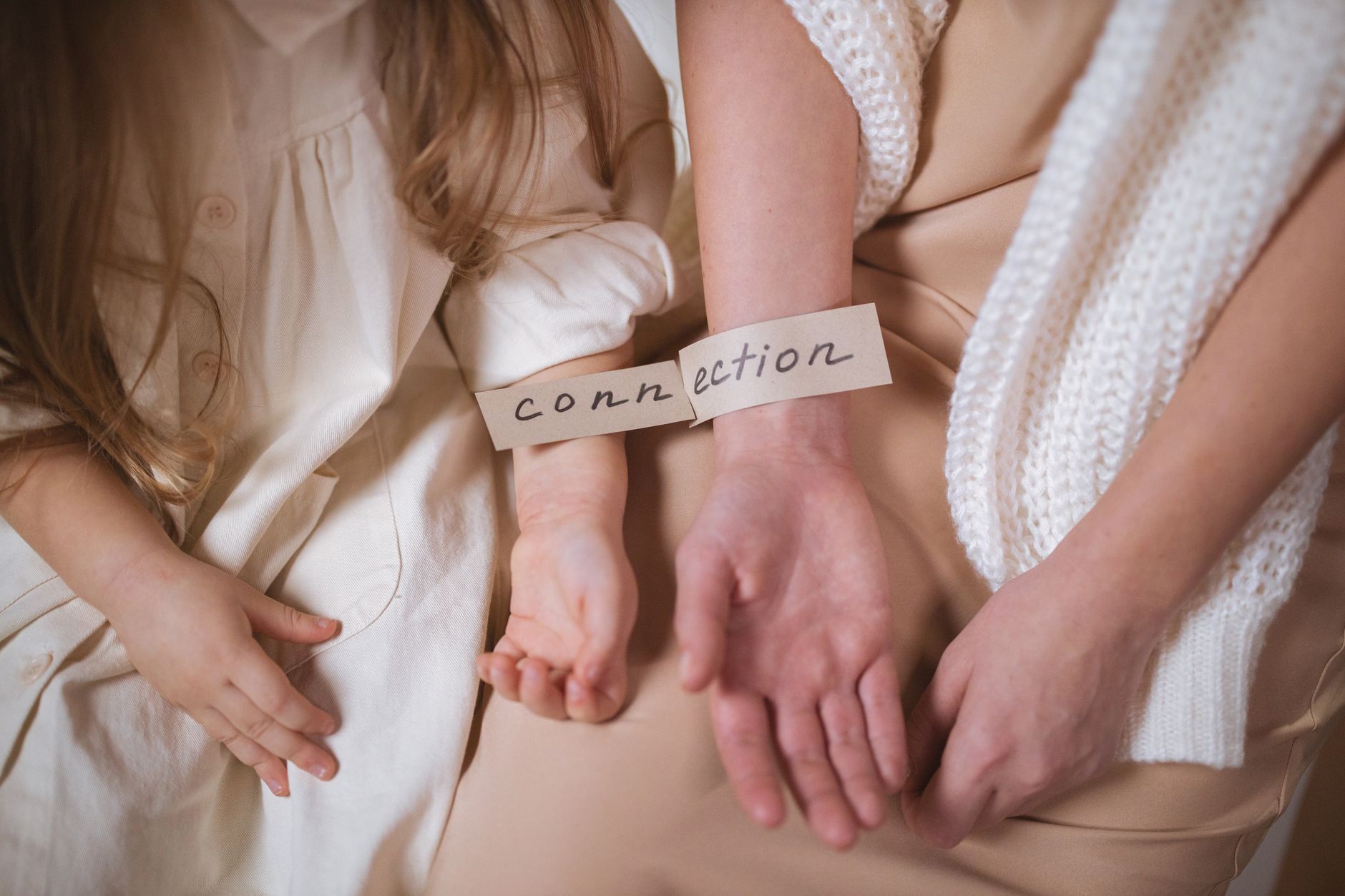
If you have ever wondered how to raise emotionally intelligent kids, it usually starts with a moment that has nothing to do with a parenting book. It starts on the floor of a hallway, or in the back seat of a car, with a child who is melting down and cannot tell you why.
Here is the part nobody says out loud: that moment is not a sign you are failing. It is the exact starting line. Emotional intelligence is not a trait some kids are born with and others are not. It is a set of skills, and skills get built one ordinary conversation at a time.
Table of Contents
Why Raising Emotionally Intelligent Kids Feels So Hard
When my oldest was in pre-K, she had a meltdown at school that still sticks with me. The class was switching from one station to the next, and she could not handle the transition. She threw toys. She ran down the hall screaming at the top of her lungs. The school called.
My first instinct was to think something was wrong with her behavior. But when we slowed down and actually looked, the real trigger was hunger. Breakfast had not been enough, and she could not get to a snack fast enough. The “behavior problem” was a feeling she did not yet have the words or the tools to manage.
That is the hard truth about emotional intelligence in young children. Big feelings show up in a small body that has no idea what to do with them. A six-year-old does not think, “I am overwhelmed and hungry.” She just explodes. Your job is not to stop the feeling. Your job is to help her understand it.
And it is hard because most of us were never taught this either. We learned to “calm down” or “stop crying,” not to name what was happening inside. So when our kids fall apart, we reach for the only script we have. Learning a better one takes patience, and it takes practice on the worst days, not just the easy ones.

How to Raise Emotionally Intelligent Kids: 5 Steps That Actually Work
You do not need a curriculum or a perfect temperament. You need a few small habits you can repeat. Here are five that genuinely move the needle.
1. Name the Feeling Before You Fix It
Before you solve anything, say what you see. “You seem really frustrated that we have to leave the park.” Naming the emotion out loud does something powerful: it gives your child language for the storm inside them. This is the idea behind what psychiatrist Dr. Dan Siegel calls “name it to tame it” — putting words to a feeling helps the thinking brain settle the reacting brain.
You are not agreeing that leaving the park is terrible. You are showing your child that feelings are not emergencies — they are information. Kids calm down faster when they feel understood than when they feel corrected.
2. Model Your Own Emotions Out Loud
Your kids learn emotional regulation by watching you do it first. So let them see it. Say the quiet part out loud: “I am feeling frustrated, so I am going to take a breath before I answer.”
I had to learn this the hard way. I am headstrong, and so is my daughter, and yelling never once worked with her — it just escalated everything. The shift came when I started managing my own frustration in front of her instead of hiding it. That single change opened the door to better conversations. You cannot teach a skill you are not willing to practice yourself.
3. Build a Daily Emotional Check-In
Do not wait for a meltdown to talk about feelings. Build a small, predictable check-in into your day — at breakfast, in the car, or at bedtime. Ask, “How are you feeling today?” and actually wait for the answer.
When naming emotions becomes a normal daily habit instead of a crisis-only event, your child builds an emotional vocabulary they can reach for under stress. For more on starting these conversations, here is how to talk to kids about their feelings without it becoming an interrogation.
4. Coach the Feeling, Don’t Dismiss It
When your child is upset, resist the urge to say “you’re fine” or “it’s not a big deal.” That teaches them their feelings are wrong. Instead, treat the moment as a coaching opportunity. Researcher Dr. John Gottman calls this “emotion coaching”: you accept the emotion, set limits on the behavior, and problem-solve together.
The line that works in our house is simple: all feelings are allowed, but not all actions are. Your child can be furious. They cannot hit. Holding both at once is how kids learn that emotions and choices are two different things. If big reactions are a regular pattern, these calm fixes for kids who melt down over small things can help.
5. Connect the Feeling to the Choice
Emotionally intelligent kids understand cause and effect — not just “I feel angry,” but “when I feel angry, I get to choose what I do next.” I talk about this with my daughter constantly. She owns her choices, not as good or bad, but as choices with consequences. I tell her the power of choice is freedom.
She does not fully grasp it yet, and that is fine. Every change in our house is a conversation, never just a rule. She is headstrong, and she needs the why, not just the what. That is exactly how it should be — understanding the reason is how the skill actually sticks.
How Atlas HQ Helps
This is actually why we built the Emotional Check-In Tool in Atlas HQ. I wanted a simple, low-pressure way to get a read on where my kids were emotionally, especially at ages when they cannot always put it into words. It is not a quiz or a mood tracker for its own sake. It is a small daily prompt that makes “how are you feeling?” a normal part of family life instead of something we only ask after everything has already fallen apart.
The belief behind it is simple. Adults already know emotional regulation matters. The check-in just helps your family start building that awareness early, one ordinary moment at a time. If you want the bigger picture, our complete guide to emotional regulation in children walks through the science and the day-to-day in more depth.
Frequently Asked Questions
At what age can you start raising emotionally intelligent kids? You can start as soon as your child can talk, and even earlier by naming feelings for them. For kids ages 6 to 8, the sweet spot is naming emotions out loud and modeling your own. The skills build gradually, so consistency matters far more than getting it perfect.
What is the most important step in how to raise emotionally intelligent kids? If you only do one thing, name the feeling before you try to fix it. Giving your child language for what they feel is the foundation everything else is built on. Solutions land much better once a child feels understood.
My child has big meltdowns. Does that mean they have low emotional intelligence? No. Meltdowns are normal, especially when a child is tired, hungry, or facing a hard transition. They are not a sign of failure — they are an opportunity to coach. Look for the trigger underneath the behavior, the way we eventually found hunger was driving our daughter’s worst moments.
How long does it take to see a difference? Most families notice small shifts within a few weeks of consistent naming and check-ins, but emotional intelligence is a long game. You are building a skill set over years, not flipping a switch. Some days will still fall apart, and that is completely normal.
Can I teach emotional intelligence if I struggle with my own emotions? Yes — and letting your child see you work on it is one of the best lessons you can offer. You do not need to be calm all the time. You need to show what repair and regulation look like in real time.
When kids know what is coming, big emotions get smaller
Atlas HQ builds the structure that helps your child feel safe, regulated, and in control.
Try it free →Start With One Conversation Today
No family does this perfectly, and you will have days where nothing you say lands and everyone goes to bed frustrated. That is not failure — that is parenting. Emotionally intelligent kids are not born that way; they are guided there, slowly, by a parent who keeps showing up.
So start small. Name one feeling today. Model one of your own. Ask one honest question at dinner. If you want a warm way to keep the momentum going, here is how to connect with your child after a hard day.
I would love to hear from you in the comments: what is one feeling word your family uses now that you never had growing up?