
It is a slow Saturday afternoon. Your kid flops across the couch, lets out a long sigh, and says the two words that put you on alert: “I’m bored.” You feel the pull to fix it right now — grab a craft, suggest a show, invent an activity. But here is the shift that changes everything: understanding why boredom is good for kids means learning to sit still while they figure out what comes next.
I am Chris. I built Atlas HQ for my own family first, and I have three kids — my oldest is six and in first grade. She is the one who taught me that “I’m bored” is rarely a problem to solve. Most of the time, it is the doorway to something better.
Table of Contents
Why “I’m Bored” Feels Like a Problem (But Isn’t)
Let’s name the moment first. Your child trails you from room to room. The whining sharpens. You start to feel like the family entertainment director, personally responsible for filling every empty minute. If you don’t, the guilt creeps in.
You are not failing. And your kid is not broken. They are simply sitting with an uncomfortable feeling and looking to you to make it go away.
Here is the reframe. Boredom is not a gap in your parenting. It is a normal, useful state — the quiet space right before a child’s own ideas show up. Researchers who study this, including the psychologists whose work the American Psychological Association has covered, find that boredom often pushes people toward creativity and problem-solving. That is exactly why boredom is good for kids: it forces them to reach inward instead of outward.
Think about what that inward reach actually builds. When a child sits with nothing to do, they practice generating their own ideas, tolerating discomfort, and making decisions without a grown-up steering. Those are the raw ingredients of creativity, independence, and self-regulation — the exact skills we all want our kids to carry into the classroom and beyond. Seen that way, why boredom is good for kids stops being a nice theory and starts looking like one of the most useful things you can protect in an over-scheduled week.

5 Reasons Why Boredom Is Good for Kids (And How to Encourage It)
You don’t have to fake enthusiasm or stage elaborate activities. You just need a few small moves that hand the moment back to your child.
1. Pause before you rescue. The next time you hear “I’m bored,” wait. Count to ten in your head before you say anything. That short silence is uncomfortable, but it is where your child’s own ideas start to form. When you fill the gap instantly, you accidentally teach them that boredom is an emergency only you can fix.
2. Hand the problem back. Try a calm, warm non-answer: “I believe you can figure out what’s next.” Not dismissive — confident. You are telling your child you trust them to solve it. The power of self-directed play, which pediatricians consistently point to, only shows up when kids get to lead.
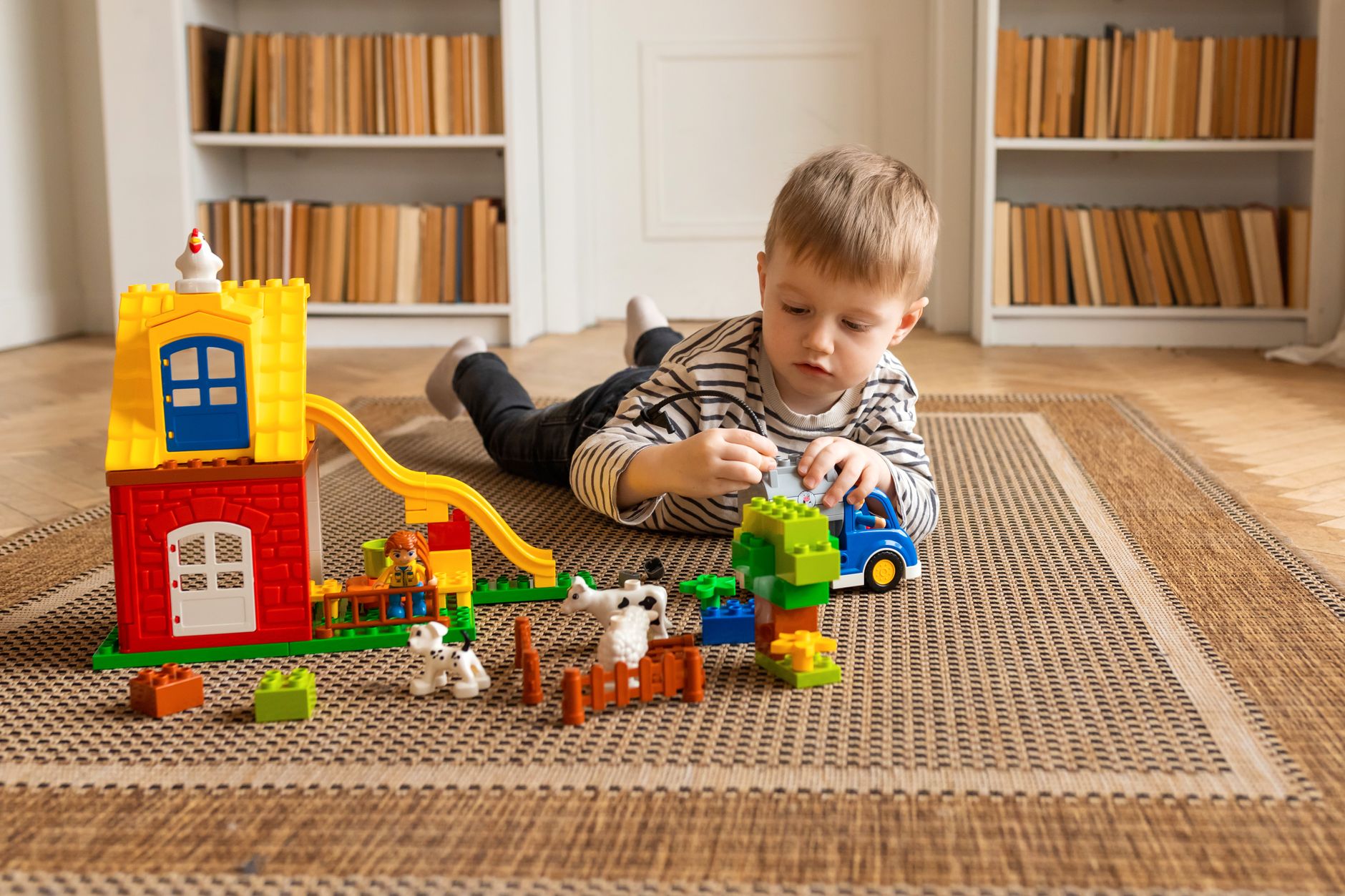
3. Stock an open-ended “boredom bin.” Keep a box of raw materials nearby — blocks, paper, tape, string, old cardboard boxes. No instructions, no single right way to use them. When kids have materials instead of a plan, they invent the plan themselves. A finished toy entertains for ten minutes; a roll of tape and a box can become an afternoon.
4. Resist the urge to schedule every minute. Free, unstructured time is not wasted time. In my house, I treat play the same way I treat everything else that matters — as a real slot in the day, not an afterthought. The structure is the fix, not the activity. My daughter can pick what happens inside that slot; the space itself is protected. Some days she reads, some days she builds, some days she just lies on the floor and stares at the ceiling for a while — and that counts too.
5. Name the feeling under “I’m bored.” Often “bored” is a stand-in for something else — lonely, tired, understimulated, or craving connection. Early emotional awareness helps kids tell the difference, a skill child development experts at ZERO TO THREE tie directly to long-term regulation. When your child can say “I actually just want to be near you,” the boredom usually dissolves.
How Atlas HQ Helps
This is actually why we built the Emotional Check-In Tool inside Atlas HQ. I kept noticing that with young kids, “I’m bored” and “I’m frustrated” and “I miss you” all came out sounding the same. I wanted a simple, low-pressure way to ask my daughter where she actually was emotionally — not to turn it into a whole conversation, just to help her get comfortable naming what she felt.
The belief behind it is straightforward: adults already know emotional regulation matters, so why not start building that awareness early, while it is still easy? A quick check-in turns a vague “I’m bored” into real information — and once a kid can name the feeling, they are far better equipped to meet it themselves. That is the same muscle that lets them sit with boredom instead of being ruled by it.
Frequently Asked Questions
Why is boredom good for kids if it makes them so restless? The restlessness is the point. That uncomfortable, itchy feeling is what pushes a child to generate their own idea instead of waiting for one. If you can tolerate the first few minutes of complaining, creativity usually follows right behind it.
How much boredom is too much? There is no exact number. The goal is not hours of aimless staring — it is regular, protected windows of unstructured time where your child leads. If boredom tips into genuine distress, loneliness, or every single afternoon feeling empty, that is a signal to connect, not a failure of the approach.
My child immediately asks for a screen when bored. What do I do? Treat screens as a scheduled slot, not the default fallback for every empty moment. When a screen is always the answer to boredom, kids never build the internal habit of entertaining themselves. Offer the open-ended bin first, and keep screen time predictable so it stops being the thing they reach for by reflex.
Isn’t it my job to keep my kids engaged? Your job is to create the conditions for growth, not to fill every minute. Protecting space for boredom is engaged parenting — it just looks quieter. You are still there, still available; you are simply letting your child do the part only they can do.
When kids know what’s coming, big emotions get smaller
Atlas HQ builds the structure that helps your child feel safe, regulated, and in control.
Try it free →You Don’t Have to Fix Every Quiet Moment
Some afternoons will still end in complaining, and that is normal. Letting your kid be bored is not about getting it perfect — it is about trusting that the quiet is doing something, even when it does not look productive.
So the next time you hear “I’m bored,” take a breath before you jump in. Boredom is not a gap to fill. It is space for your child to grow into. If you want more on helping kids sit with big feelings, take a look at our guide on how to raise emotionally intelligent kids — it pairs well with everything here, and so does building a little more independence into their day.
I would love to hear from you in the comments below.