
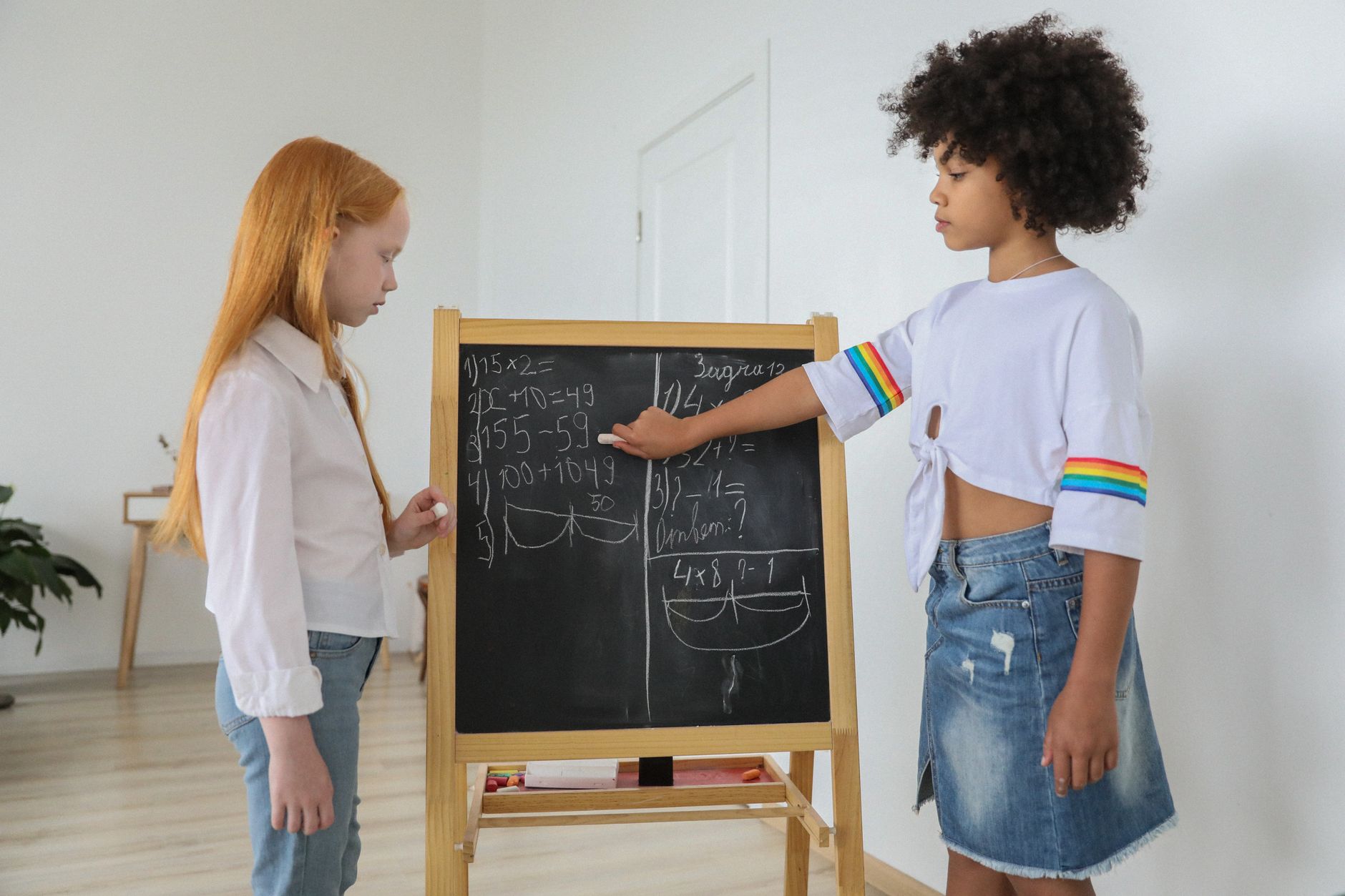
Summer math practice for kids sounds like the last fight you want to pick in July. The workbook comes out, the shoulders slump, and before you have even found a pencil, someone is saying “I hate math.” You are not trying to run a summer school. You just do not want your kid walking into fall having forgotten everything they worked so hard to learn.
Here is the good news: keeping math sharp at home has almost nothing to do with worksheets. It has everything to do with the small, ordinary moments you already share. Let me show you what that looks like.
Table of Contents
Why Summer Math Practice for Kids Feels Like a Battle
Let’s name the real problem first. It is not that your kid can’t do the math. It is that the second it feels like work, the willingness disappears.
I see this in my own house. My oldest is in first grade, so we are not deep into homework yet, but we already have our version of it: practice battles. Getting her to sit down with CodeMonkey for thirty minutes turns into crying and attitude and the same three words every parent knows: “It’s too hard.” I have watched her quietly finish puzzle after puzzle on her own, completely capable, and then hit one hard one and refuse to even try. The wall is not skill. The wall is the moment it stops being fun.
Math is where this shows up most for a lot of families, and there is a reason summer makes it worse. Research on summer learning loss suggests kids can slip roughly two months of math skills over a single break, more than they lose in reading, according to Brookings. Math is a skill that fades when it sits unused. But “use it” does not have to mean “drill it.” That distinction is the whole game, and it is also the heart of how we think about learning at Atlas HQ. If you are already worried about the wider slide, our guide on how to prevent the summer slide is a good companion to this one.

5 Simple Ways to Make Summer Math Practice for Kids Stick
None of these look like school. That is the point. Pick one or two and let the rest go.
- Turn your kitchen into a math class. Cooking is fractions you can eat. Ask your kid to double the pancake recipe, and suddenly one-half plus one-half means something real. At the store, hand them a budget and let them add up the cart, or figure out which box is the better deal. If you want a nudge, Bedtime Math sends one short, playful math problem a day built around real life. Your kid is doing math. They just do not call it that.
- Hide the math inside a game. A deck of cards is a math curriculum in disguise. Play War and they are comparing numbers. Play a board game and someone has to keep score, count spaces, and handle the money. Dice games turn addition into something you win at. Ten or fifteen minutes of this does more for number sense than a page of problems, because nobody is bracing for it.
- Ten minutes a day beats an hour on Sunday. This is the one parents get backward. A single long session feels productive and creates dread. Ten focused minutes, most days, keeps the skill warm without the fight. Attach it to something that already happens, like right after breakfast or before screen time comes on. Consistency is what makes it stick, which is the same principle behind building real study habits in kids.
- Let them be the teacher. When your kid solves something, ask them to explain how they did it. “Walk me through it” does two things: it locks the skill into memory, and it hands them a little pride. I lean on this constantly, not just for math. At dinner I ask what she learned on CodeMonkey, or in martial arts, or even on a playdate. When kids narrate their own thinking, they start to see themselves as capable, and capable kids try harder things.
- Follow the mood, and feed them first. A hungry, tired kid is not going to focus, and pushing through it just teaches them that math means misery. One thing I learned the hard way: let her eat first, then ask for anything else. And if you are someone who hated math yourself, watch your words. Saying “I was never a math person” quietly hands that story to your kid. Stay neutral, be curious alongside them, and if you feel rusty, Khan Academy can refresh you as fast as it teaches them.
How Atlas HQ Helps
Here is why we built the Lessons Learned feature into Atlas HQ. It came straight from those dinner-table conversations. I did not want learning to feel like a thing that only happens at a desk, so we made a simple, daily prompt for kids to name something they learned that day, whatever it was. Math from the kitchen counts. A chess move counts. A tricky level on an app counts.
The point is not to track homework. It is to help your family notice, out loud, that learning lives everywhere, and that your kid is doing it all the time. When a child hears themselves say “today I figured out how to split the pizza evenly,” math stops being the enemy and starts being something they are already good at.
Make homework time less painful — starting tonight
Atlas HQ gives your kids a step-by-step homework routine they can follow on their own. No more arguing. No more nagging.
Build your homework routine →Frequently Asked Questions
How much summer math practice for kids is actually enough? Ten to fifteen minutes on most days is plenty for elementary-age kids. The goal over summer is to keep skills from fading, not to teach the next grade ahead. Short and consistent beats long and occasional every time.
My child says they hate math. How do I even start? Start where there is no pressure. Games, cooking, and store trips let kids do math without the label, which sidesteps the resistance entirely. Once the dread drops, you can slowly reintroduce more direct practice.
Is screen-based math practice okay? Yes, in moderation. Well-designed apps like Khan Academy or Bedtime Math can be genuinely useful, especially when a kid enjoys them. Balance them with hands-on, real-world math so it does not all live behind a screen.
What if I was bad at math myself? You do not have to be good at math to raise a kid who is comfortable with it. What matters most is your attitude. Staying calm and curious, instead of anxious or negative, protects your child from inheriting math dread.
You do not need to be perfect at this, and some days the ten minutes just will not happen. That is fine. The families who keep math alive over summer are not the ones running drills. They are the ones who fold a little counting, a little measuring, and a little “walk me through it” into an ordinary day. Start with one idea this week and see how it lands. For more on keeping young minds busy without a fight, take a look at getting kids to read over summer too. And I would love to hear from you in the comments: which of these could actually work in your house?