
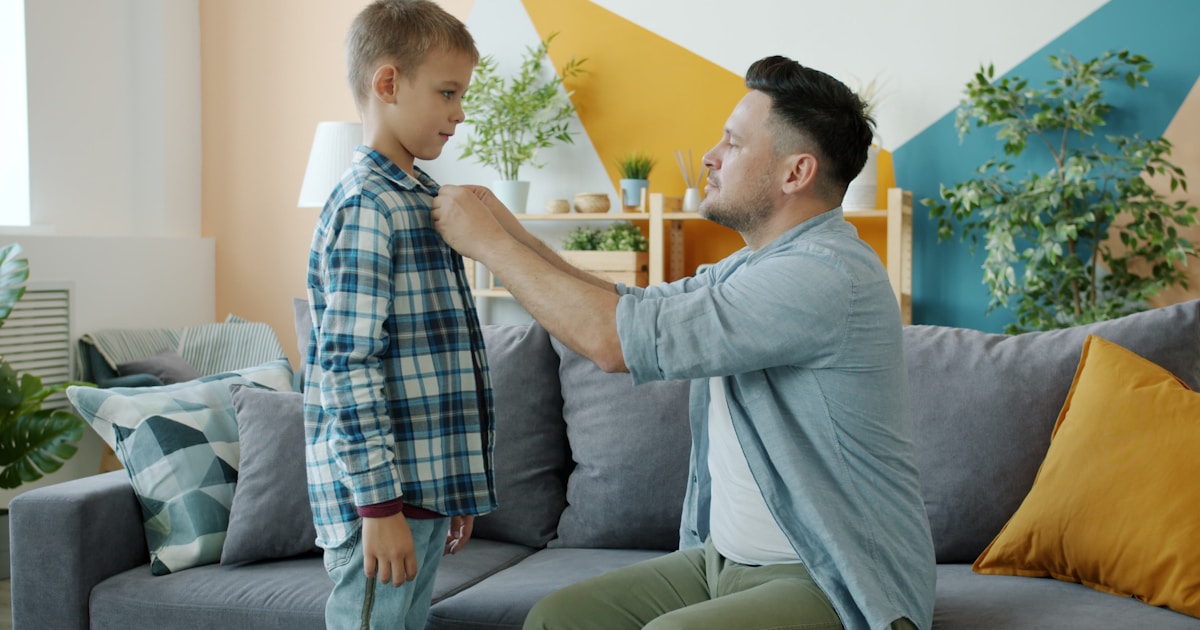
Why I Built Atlas HQ: The Real Story Behind This Family Organization App
Every family organization app on the market promises to fix your mornings, simplify your week, and make parenting feel effortless. I built one. And I want to tell you the truth about why — because it wasn’t a business idea. It started in a car, with my six-year-old daughter, on a regular Tuesday morning when she mentioned something she wanted to bring to school and both of us knew she was going to forget it.
This is the complete story.

Table of Contents
- The Conversation That Changed Everything
- Where I Came From
- The Problem I Was Trying to Solve
- The First Version — A Calendar Alarm Called Morning Checkin
- What My Daughter Taught Me While Building It
- What Atlas HQ Is Today — and Where It’s Going
- Who This App Is Really For
- How Atlas HQ Helps
- Frequently Asked Questions
- All Founder Story Resources
The Conversation That Changed Everything
My daughter wanted to bring something extra to school. I don’t even remember what it was now — a drawing, a book, something she’d made at home. What I remember is the conversation in the car, sitting outside in the morning light, when she mentioned it like it was obvious she’d remember it by the time we got there.
We both knew she wouldn’t.
She was six. First grade. Smart, stubborn, fully convinced she had it handled. I looked at her and thought: there is no system for this. Not in our house. Not in a way that didn’t require me to track it, remind her three times, and still watch it fall through the cracks.
I’m a software developer. I write code for a living. I build systems that solve problems. So that night, instead of just hoping tomorrow would be different, I opened my calendar and created a 6:45am alarm. I called it “Morning Checkin.” Attached to it was a simple task list — everything she needed to do before school, in the order it needed to happen.
That alarm, that list, that small and unglamorous fix — became the Routines feature in Atlas HQ. And it’s also how this whole thing started.
Where I Came From
I grew up Black in inner-city neighborhoods. The kind of upbringing where you don’t share feelings at the dinner table, you don’t ask too many questions, and the rules are communicated clearly without much room for discussion. Kids are seen, not heard. You do what you’re told.
I carry that with me — not as something to repeat, but as something to break.
When I became a father, I made a deliberate decision. I was going to raise my kids through conversation, not commands. I was going to be the parent my children needed, not the parent I was given. That meant learning patience the hard way, especially with my oldest daughter, who is everything I am — headstrong, independent, and completely unwilling to be talked at instead of talked to. When I raise my voice, she shuts down. When I speak with her like she’s a full person, she opens up. That lesson came slowly, and it cost me some evenings I’m not proud of.
I also read constantly. Entrepreneurs, business builders, people who’ve built extraordinary things from ordinary days — almost all of them live by routines. Not because routines are exciting, but because they create the scaffolding that makes everything else possible. That wasn’t lost on me as a parent. Research on children’s development consistently shows that predictable structure helps kids feel safe, regulate emotions, and build the independence that parents are actually trying to grow. I wasn’t just building habits for her. I was building the conditions for the person she’d become.
My oldest daughter takes Taekwondo three days a week and practices programming through CodeMonkey and chess at home. I watch her apply the Taekwondo mindset — take your shot, one step at a time, you don’t have to get it perfect — and I think about how to extend that belief into learning, into mornings, into all the places where she decides something is “too hard” before she’s really tried. That’s part of what Atlas HQ is trying to do. Not just manage tasks. Reinforce the identity of a kid who follows through.
The Problem I Was Trying to Solve
Before I built anything, I had a problem. And it wasn’t that my family was falling apart. It was quieter than that.
I was the operating system.
What time school starts. Which day she has Taekwondo. Whether her homework block actually happened last night or whether we let it slide. What we said we’d do about screen time. What we said we’d do about bedtime. The form due on Friday. Who picks her up on Tuesday. All of it sitting in my working memory, all the time, competing with everything else I was trying to hold at work and at home.
When it wasn’t in my head, it wasn’t anywhere. That’s the real mental load of parenting — not the tasks themselves, but the invisible, unacknowledged weight of tracking them, managing them, and being the only person in the house who knows what needs to happen next.
My daughter also struggled with abrupt transitions. Her school flagged it — she’d resist moving from station to station without warning. She and I are alike in that way. I don’t love switching gears either. But I’d learned to manage it in myself. She was still figuring it out. And that meant that any family system that didn’t build in predictability and structure — one that just said “okay, now do the next thing” without any scaffolding — was going to fail her every time.
A family organization app wasn’t what I set out to build. I set out to fix something specific. The app came because the fix worked.
The First Version — A Calendar Alarm Called Morning Checkin
The first version was not impressive. It was a 6:45am calendar event titled “Morning Checkin” with a task list attached. That’s it. No branding, no product, no vision statement. Just a list: brush teeth, get dressed, pack the bag, eat breakfast.
But something happened when she started using it. She didn’t need me to repeat myself. The list told her what came next. The transition from task to task wasn’t a surprise — it was expected. And for a kid who genuinely struggled with “okay, now do something different,” having a visible sequence she could follow made the morning feel different.
I adjusted the routine as I went. I started waking her up ten minutes earlier so she had time to eat without rushing — because she is, without question, a slow eater. I sequenced breakfast as the last item on the list, not the first, so everything else was handled before she sat down. If she was taking her last bite when the bus appeared at the end of the block, we were winning.
I kept building. The alarm became a routine. The routine became a replicable pattern. I started thinking about what else belonged in a real family system — not just mornings, but evenings, homework blocks, the moments in between. I started reading more about habit formation in children, understanding why some routines stick and others collapse, and designing around what actually works for real families instead of ideal ones.
That’s when it stopped being a personal fix and started becoming a product.
What My Daughter Taught Me While Building It
Here’s the part I didn’t see coming.
I started building Atlas HQ at 3am every morning. I’m a full-time software developer — I have a team, I have client work, I have a family with three kids. Building this app meant carving out the hours before everyone else was awake. By the time the evening routine arrived, I had been working since 3am, and I was mentally done.
That’s exactly when the gratitude statements were supposed to happen.
And some evenings, I wanted to skip it. I built the feature. I believed in it. But when you’re on hour sixteen of a day that started before sunrise, sitting down to do a reflection exercise with your six-year-old feels like one more thing on a list that never ends.
My daughter didn’t let me off the hook.
She enjoyed the gratitude statements. She’d look forward to them. She’d have something ready before I’d even opened the app. On the nights when I was ready to say “not tonight,” she was already telling me what she was grateful for. She pushed me through it when I didn’t have anything left. And by doing that, she showed me — in the most direct and humbling way possible — that what I’d built was actually working.
The adoption wasn’t quick. That’s the honest answer. It was slow. It was a real behavior change, not a feature launch. There were weeks when we were consistent and weeks when we weren’t, and the data in the app would show me both — which was the point. I built it to show real performance, not the version of reality I wanted to believe. It’s easy to think you’ve been doing something consistently when you haven’t touched it in three weeks. The data doesn’t lie.
She helped me be strong when I was weak. I learned as much from building this with her as she ever learned from using it.
What Atlas HQ Is Today — and Where It’s Going
Atlas HQ today is a family organization app built around one central idea: you shouldn’t have to hold everything in your head.
Here’s what it looks like in practice. You open the Dashboard and get a real snapshot of how the week is going — a preview of the activity feed showing who did what, which routines ran, wins, reflections — so you’re not interrogating everyone at the dinner table to piece it together. Day to day, Routines are the engine: morning, bedtime, homework windows, whatever your family runs. You can build from a task library so you’re not writing the same list in a Notes app every Sunday.
Beyond the logistics, there are dedicated areas for Good Deeds, Gratitude, Affirmations, and Lessons Learned. That’s the emotional layer alongside the calendar — the part that’s about who we’re becoming, not just what we’re completing. There’s a Goals section for what you’re working toward as a family or per kid, a full Calendar with Google and Outlook integration, Stats that show streaks and completions over time (the kind that help you notice “Tuesdays are brutal” without turning into a spreadsheet parent), and an AI assistant that suggests and nudges based on what you’re already doing — not magic, but a genuinely useful co-pilot.
What I’d honestly say: you still set the culture. Atlas is there to remember, surface, and suggest so you’re less exhausted from holding it all in working memory.
Where it’s going is toward everywhere family life actually happens. Mobile first — fast check-ins, today’s plan, one-tap completes for parents who live between school pickup and bedtime. Then voice, with an Alexa skill tied to your family account so the kitchen and car become extensions of HQ: “what’s left on the morning list?”, “log that we did teeth”, “what’s one thing we’re grateful for tonight?” And eventually wearables — a glanceable streak or next item on your wrist, a gentle tap instead of a notification that hijacks your day.
The shift I care about most isn’t a feature. It’s moving from “track everything” to “help the family focus on what actually matters.” Fewer surfaces, smarter defaults, an AI that respects real life instead of fantasy life. One coherent view across routines, goals, calendar, and character — so you’re not maintaining four mental apps under one login.
One sentence I’d put on the wall: Atlas HQ should shrink the chaos and enlarge the meaningful.
Who This App Is Really For
This is not for the family that already has it figured out. If your mornings run smoothly, your kids follow through without nagging, and the week doesn’t feel like controlled chaos — you’ve solved the problem I’m trying to solve, and I mean that without a trace of sarcasm.
This is for the parent who is capable everywhere else. Holds it together at work. Manages money, appointments, all of it. But home rhythm is where they feel behind — not because they’re failing, but because they’re the only one carrying the plan. They’re the person who knows what time the bus comes, what form is due on Friday, what the screen time agreement was three weeks ago, and whether it’s been honored.
They’re tired of nagging. Not because they don’t care — because they care so much that nagging is eating the actual relationship, and they can see it happening, and they still can’t stop because without it nothing gets done.
The frustration isn’t a missing calendar. It’s something deeper: I love my people, and I’m drowning in the operations of loving them.
That’s who I built this for.
We’re not building a punishment-and-reward drill app. There are plenty of those. We’re building closer to habits and heart — structure that makes the meaningful stuff possible, rather than replacing it with compliance tracking. The real promise of any family organization app isn’t to manage your kids. It’s to give you back enough headspace to actually connect with them.
If you want to understand the mental load piece more deeply, this post gets into the specifics of what carrying the family plan actually costs you — and what relieves it. And if you want the longer story of how routines nearly broke down for us before they finally worked, Why I Almost Gave Up on Routines is the honest version.
How Atlas HQ Helps
Every feature in Atlas HQ has a direct origin story in my own family.
Routines came from the car conversation. Lessons Learned came from wanting our dinner table conversations to actually go somewhere — asking what my daughter learned that day, not just at school but at Taekwondo, at CodeMonkey, in life. Gratitude and Affirmations came from my own frustration management — I learned that shifting my own emotional state before engaging with a resistant child changed everything about how the conversation went.
The task check-off system was built around a simple truth: memory is unreliable, and data is more honest than feeling. It’s easy to believe you’ve been consistent for three weeks when you haven’t. The app shows you what’s real.
This is why we built it the way we did. Not because it’s a good product strategy (though we hope it is). Because this is what my family needed, and I believe it’s what a lot of families need.
Frequently Asked Questions
Is Atlas HQ a family organization app or a parenting app?
It’s both — and the distinction matters. Atlas HQ is built around the whole family, not just parent-to-child task management. Kids have their own experience, parents have their own view, and the app connects them in one dashboard. It’s designed for the family as a unit, with a layer for character and emotional check-ins that most productivity tools skip entirely.
What age kids is Atlas HQ designed for?
The core experience is built for elementary through early middle school — old enough to own a checklist, young enough that structure still genuinely helps more than it hurts. That said, the emotional layer (gratitude, good deeds, lessons learned) scales across ages. The app grows with your family.
What makes this different from a regular family calendar app?
A calendar manages time. Atlas HQ manages routines, goals, character, and the data of how your family is actually doing — not just what’s scheduled. The Gratitude, Good Deeds, Affirmations, and Lessons Learned sections don’t exist in calendar apps. Neither does the AI assistant that works from your family’s existing patterns. It’s built for the full picture of family life, not just logistics.
Does Atlas HQ replace tools like Google Calendar?
It’s designed to work alongside them. You can connect Google or Outlook so Atlas reflects your real schedule. The goal isn’t to replace what you already use — it’s to give your family one place where the routines, goals, and emotional check-ins live together, separate from the noise of work calendars and email.
Do both parents need to use it for it to work?
No — one parent using it consistently will still see real value. The visibility is better when multiple adults are in the loop, but Atlas doesn’t require household-wide buy-in to start working for the parent who needs it most. Start with yourself. The structure alone will change how your mornings run.
Why did you build this instead of just using what already existed?
Because nothing did what I actually needed. Calendar apps don’t include gratitude statements. Habit trackers don’t account for kids. Chore apps don’t show you what’s really happening across the whole family week over week. The gap between what exists and what families actually need is real. That gap is what Atlas HQ is built to fill.
All Founder Story Resources
- Atlas HQ Founder Story: The Moment That Finally Made Sense — the specific morning that set everything in motion
- Why I Almost Gave Up on Routines — what nearly broke the system before it worked
- The Morning That Made Me Build Atlas (coming soon)
- The Screen Time Battle That Changed How I Parent (coming soon)
- Building an App My Kid Actually Begged to Use (coming soon)
- The Parenting Moment I’m Most Embarrassed By (coming soon)
- Evening Routines Were a Disaster Until We Did This One Thing (coming soon)
- What I Discovered About My Own Parenting When I Started Tracking It (coming soon)
- The Week Atlas Broke — And Why It Was the Best Thing That Happened (coming soon)
- Why I Chose Behavior Change Over Features (coming soon)
- What Parents Keep Getting Wrong About Routines (coming soon)
- The Unexpected Thing That Happened When My Family Used Atlas for 30 Days (coming soon)
- Where Atlas Is Going — and Why I’m Building It in Public (coming soon)
- 90 Days of Daily Blogging: What I Learned (coming soon)
Real families aren’t perfect. Neither is this app. Neither am I as a parent. But I built Atlas HQ because I believe you deserve a system that works for real life — not the version where you have ninety minutes on Sunday to plan the week, but the version where it’s 7:43am, someone can’t find their shoe, and the bus is two minutes away.
That family deserves a command center. That parent deserves a break from being the operating system.
Try Atlas HQ free and see if it helps your family find its rhythm. And if you’ve read this far — drop a comment below. What does your family’s hardest part of the week look like? I read every one.
Atlas HQ was built by a parent who needed it first
I didn’t build this for the app store. I built it because my own family needed it. Come see what we made.
Meet Atlas HQ →
[…] is a recipe for the app collecting dust the moment you stop pushing. I knew it. Our complete guide to why I built Atlas HQ goes deeper into the founding story — but this post is about what happened when that dynamic […]