
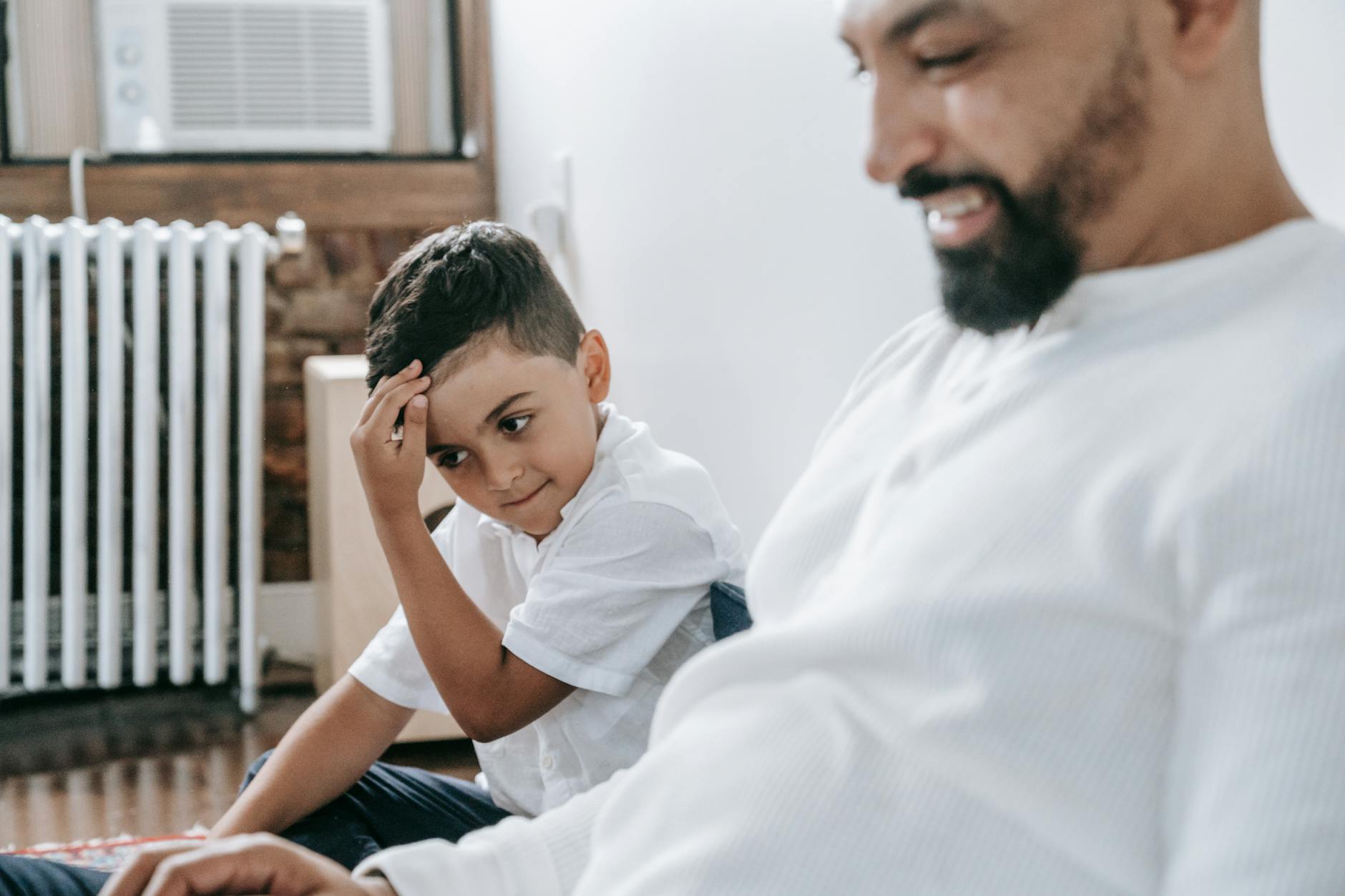
Child Seems Anxious and Worried: 5 Proven Ways to Help That Actually Work
Your child hasn’t said a word since you picked them up from school. They’re not sick. They didn’t have a bad grade. They just seem worried — like something heavy is sitting on them that they can’t explain. If your child seems anxious and worried more days than not, you’re not imagining it, and you’re not overreacting.
Childhood anxiety is one of the most common things parents bring up when they talk about what’s hard right now. Not tantrums, not homework — worry. The quiet kind that shows up in tight shoulders and a lot of “I don’t know.” The kind that makes drop-off harder, bedtime longer, and small changes feel like a very big deal.
This isn’t about fixing your child. It’s about understanding what’s underneath and giving them tools to work with it.
Table of Contents
Why Your Child Seems Anxious and Worried — What’s Actually Happening
Before you can help, it helps to understand what you’re actually seeing.
Anxiety in school-age children isn’t the same as adult anxiety. At 6, 7, or 8 years old, kids don’t have the language or the brain development to say “I’m feeling overwhelmed.” What you see instead is behavior. The child who refuses to go to a birthday party. The one who says their stomach hurts every Monday morning. The one who asks the same “what if” question seventeen times even after you’ve answered it.
According to the American Psychological Association, anxiety disorders are among the most common mental health conditions in children — and most cases go unrecognized because the signs don’t look like what parents expect. They look like moodiness, clinginess, meltdowns, or simply withdrawal.

I saw this firsthand with my oldest daughter. She had a hard time with transitions from the time she was in preschool — going from one station to another would send her into a full meltdown. Toys thrown, running down the hall, screaming. The school called. For a while, we didn’t know what was driving it. It turned out hunger was a major trigger: breakfast wasn’t enough, and she couldn’t get to a snack fast enough to regulate. But underneath the hunger was also a nervous system that didn’t like not knowing what came next.
That pattern — needing to know what comes next, struggling when the sequence changes — is at the core of a lot of anxious behavior in kids this age. It’s not defiance. It’s their nervous system doing exactly what it’s designed to do: protect them from uncertainty.
The good news is that anxious kids are not broken. They’re sensitive, perceptive, and often very smart. They just need different tools than calmer-baseline kids do. The strategies below are the ones that have made the most consistent difference — in research, in practice, and in real families.
5 Proven Strategies When Your Child Seems Anxious and Worried
1. Name the Emotion Out Loud
One of the most powerful things you can do when your child is visibly anxious is to name what you’re seeing. Not “you’re fine” or “there’s nothing to worry about” — but: “I can see you’re feeling worried right now.”
This sounds small. It isn’t.
When kids hear their emotion named by a trusted adult, something physiologically shifts. Research from UCLA’s Lieberman et al. on affect labeling shows that simply naming an emotion reduces activity in the amygdala — the part of the brain driving the anxious response. You’re not validating the worry as rational. You’re validating that the feeling is real, which is all the nervous system needs to start calming down.
Stop correcting. Start naming. “I see you’re nervous about tomorrow” is more effective than any reassurance you can offer.
2. Build a Predictable Daily Sequence
Anxious kids don’t need perfect days. They need predictable ones.
When your child knows the sequence of their day — what comes after school, what happens before bed, what the morning looks like — their nervous system gets to rest between those checkpoints. They’re not burning energy scanning for what might change. That freed-up energy goes toward coping, learning, and connecting with you.
This doesn’t mean a rigid schedule. It means consistent anchors: the same after-school snack ritual, the same wind-down routine, the same order of things before they leave the house in the morning. The brain is pattern-seeking. Give it patterns, and it spends less time in alarm mode.
For our family, adding structure to the parts of the day that used to feel chaotic — mornings especially — made a measurable difference in my daughter’s baseline anxiety. Not because we gave her more rules, but because she could predict what was coming.
3. Create a Calm-Down Spot
Give your child a designated place to go when feelings get big. Not as a punishment — as a resource.
This might be a beanbag in the corner of their room. A blanket fort. A cozy chair with a basket of fidget tools and a few books. The location matters less than the fact that it exists, it belongs to them, and they know what it’s for.
You introduce it when things are calm: “This is your calm-down spot. When things feel like too much, this is a good place to go.” Then you model using it yourself. When you’re frustrated, you say: “I need a minute — I’m going to go use my calm-down corner.” You’re teaching them that feelings are manageable, not shameful.
This is different from sending a child to their room when they’re dysregulated. That’s reactive. A calm-down spot is proactive — a tool they can learn to reach for before the meltdown, not after.
4. Ask “What’s the Smallest Piece of This?”
A big part of childhood anxiety is catastrophizing — the brain jumps straight from “I have a book report due” to “I’m going to fail and everyone will laugh at me.” Kids don’t do this on purpose. It’s just how an anxious brain works: it leaps to the worst possible outcome.
When you see this happening, resist the urge to argue with the fear. Instead, shrink it. “What’s the first, smallest step?” Works better than “That won’t happen.” Ask them: “What’s the tiniest piece of this we could handle right now?” That question brings the nervous system back online and gives the thinking brain something to work with.
This approach is grounded in cognitive behavioral therapy for children, and it’s one of the most practical tools you can teach a school-age child because it transfers to everything — tests, social situations, trying something new.
5. Do Regular Emotional Check-Ins (Not Just When Things Go Wrong)
One of the traps parents fall into is only asking about feelings when something is visibly wrong. The problem is that anxious kids are often very good at masking. By the time you can see the anxiety, it’s already been building for hours.
Daily, low-stakes check-ins change this. Not “how was your day” — that gets a one-word answer. Try: “On a scale of 1 to 10, how are you feeling right now?” or “What was the hardest part of today?” These questions create a habit of noticing and naming emotional states, which is the foundation of every regulation skill you’ll ever teach.
This is actually why the Emotional Check-In Tool in Atlas HQ exists. I built it because I needed a consistent, non-confrontational way to take the temperature of how my daughter was doing each day. At younger ages, it helps kids get comfortable expressing feelings before the big feelings hit.
How Atlas HQ Helps Anxious Kids Through Predictability
When I started paying closer attention to when my daughter’s anxiety spiked, the pattern was clear: it happened when she didn’t know what was coming. Not during hard moments — during transitions. Changing plans. Unexpected schedule shifts. The gap between school pickup and what happens next.
Building a consistent daily structure in Atlas HQ changed that — not because an app fixes anxiety, but because having a visible routine my daughter could reference reduced the number of times she had to ask “what’s happening next.” That’s one less stressor in her day. And those add up.
If you want to read more about the building blocks of emotional regulation in kids, the full guide on emotional regulation in children covers the research and practical strategies in depth.
When kids know what is coming, big emotions get smaller
Atlas HQ builds the structure that helps your child feel safe, regulated, and in control.
Try it freeFrequently Asked Questions
Is it normal for a child to seem anxious all the time?
Some anxiety is completely normal in school-age children — it’s part of healthy development. When worry starts to interfere with daily life, sleep, school, or friendships, that’s when it’s worth paying closer attention. Persistent anxiety is common and very treatable with the right support.
How can I tell if my child’s anxiety is serious?
Look for patterns: Is the worry consistent and hard to interrupt? Does it show up in physical symptoms like stomachaches or headaches? Is your child avoiding things they used to enjoy? If anxiety is affecting multiple areas of their life consistently, talking to your pediatrician or a child therapist is a reasonable next step.
What should I not say to an anxious child?
Avoid “there’s nothing to worry about,” “you’re fine,” or “just stop thinking about it.” These dismiss the feeling without addressing it, which can make the child feel misunderstood. Instead, acknowledge what they’re feeling before offering any reassurance.
Can structure really reduce a child’s anxiety?
Yes — predictability is one of the most well-supported interventions for anxious children. When kids know what to expect, their nervous system doesn’t have to stay on high alert. Consistent routines have been shown to reduce anxiety symptoms in children across multiple studies.
How do I know if my child needs professional help?
If anxiety is interfering with school attendance, friendships, sleep, or your child’s ability to try new things — and it’s been going on for more than a few weeks — it’s worth talking to your pediatrician. Anxiety in children responds very well to early intervention.
Some days your child is going to seem anxious, and no amount of strategies will make it disappear immediately. That’s not failure. That’s what it looks like to raise a kid with a sensitive nervous system in a world that moves fast. What you’re doing by learning this — naming feelings, building routines, creating calm-down spots — is giving them a foundation they will use for the rest of their life.
If you’re looking for more on helping kids manage their feelings, the post on how to help kids manage emotions is a good next read. Drop a comment below — what does anxiety look like in your house, and what’s one thing that’s helped?