
Why Kids Can’t Remember What They Learned (And Why Working Memory Is Only Part of the Story)
When Chris, the founder of Atlas HQ, first noticed this with his daughter in Kindergarten, he brushed it off. Kids do so much in a day — maybe nothing stood out. But when the same blank look kept showing up in first grade, he started paying closer attention.
Then he had a thought that stopped him in his tracks: if someone asked me what I learned at work today, I probably couldn’t tell them either. He sat at his desk, wrote code, sat in meetings. Nothing felt “memorable” in the way a parent might hope. And he’s an adult with decades of practice managing what he takes in.
So what chance does a seven-year-old have?
The honest answer: not much — unless something at home helps bridge the gap.
Here’s what’s actually happening. When kids are at school, they’re absorbing information in a state of constant stimulation — new sounds, social dynamics, instructions, transitions. Their working memory is doing a lot of heavy lifting just to get through the day. Working memory in children is limited — it can only hold so much at once, and without a moment to consolidate what they took in, most of it fades fast.
By the time your child walks in the door, their brain is in “done” mode. They’re not being difficult or inattentive when they can’t recall what happened. They’re depleted — and they need something to bring them back.
That something is a consistent home routine that makes recall feel natural. Not quizzing. Not pressure. Just a few intentional habits that give their brain a reason to revisit what it absorbed.
3 School Memory Strategies That Actually Work at Home
The good news: this does not require a tutor, a curriculum, or a lot of time. These three approaches each take five minutes or less.
1. The “Teach Me One Thing” Rule
Ask your child to teach you one thing they learned today. Not “what did you learn?” — that question is too open and often leads to a shrug. Try: “What’s one thing you could teach me right now?”
This simple reframe works because it activates retrieval — the process of pulling information out of memory rather than just receiving it. When your child explains something in their own words, even imperfectly, they’re doing the mental work that makes learning stick.
It doesn’t have to happen at a desk. The car ride home, bath time, dinner — anywhere works. The goal is the habit, not the setting.
2. The 5-Minute After-School Debrief
Before screens, before snacks, build a brief pause. Ask your child to tell you three things from their day — anything. What they ate at lunch, what happened at recess, one thing the teacher said. Just three.
This brief transition moment between “school brain” and “home brain” gives their working memory a chance to consolidate what it stored. It also sends a message your child internalizes over time: what happened at school matters to our family.
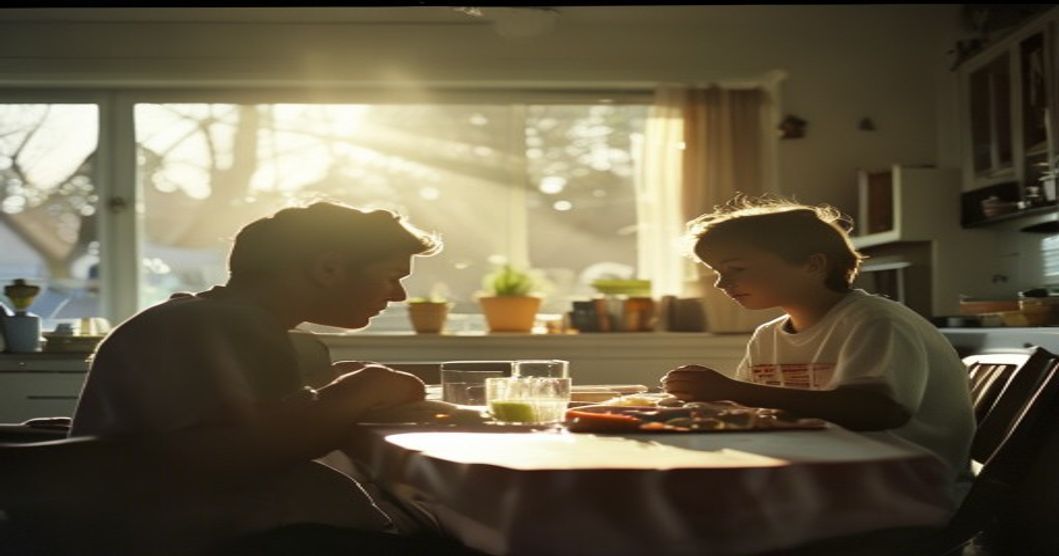
Chris started doing this intentionally with his daughter in first grade — making dinner time a space for that conversation rather than leaving it to chance. It started as a question. It became a ritual. And over time, the answers got longer.
3. Expand Learning Beyond School
Here’s the part most parents don’t think about: school is not the only place your child is learning. Martial arts teaches focus and discipline. Chess teaches strategic thinking. A playdate teaches negotiation and empathy. Every experience counts.
Ask “what did you learn?” everywhere, not just about homework. When kids get into the habit of reflecting on what they took in — anywhere — they start to see themselves as people who learn from the world, not just from a classroom.
One of the best things Chris ever heard from a parent at the martial arts studio: “I learn and read what my daughter does, so we are doing it together.” Not because it’s a productivity hack — because it reframes learning as something a family does alongside each other.
How Atlas HQ Helps With Lessons Learned
When it became clear that “what did you learn today?” was a question worth asking every day — not just about school — that insight became part of why we built the Lessons Learned feature in Atlas HQ.
The idea wasn’t to track homework or grades. It was to give families a lightweight way to capture what their child took in from any part of their day — a class, a conversation, a game, a moment that mattered. Not graded. Not formal. Just a small habit, built into the rhythm of your family’s day, that makes learning something you reflect on together.
You can learn more about how Atlas HQ supports your family’s after-school routine at atlas-hq.co.
Keep Going — Even When It Doesn’t Work
Some evenings, none of this will land. Your child will be too tired, too wound up, or too hungry to do anything but stare at the wall. That’s normal. Routines don’t work because they’re perfect. They work because they’re consistent enough to become expected.
Pick one of these three approaches and try it for a week. Just one. If it clicks, you’ll know. If it doesn’t, adjust. The goal isn’t to turn dinner into a debrief — it’s to create one small moment that says: what you learned today matters, and so do you.
What does your child say when you ask what they learned at school today?
And do you have a ritual that helps your family connect after school — what works for you?
Make homework time less painful — starting tonight
Atlas HQ gives your kids a step-by-step homework routine they can follow on their own. No more arguing. No more nagging.
Build your homework routine →