
How to Help Kids With Reading at Home: 7 Proven Strategies That Work
Table of Contents
Your kid brings home a reading log. You sit down together — and somewhere in the middle of the second page, you realize you don’t actually know how to help them read better. You’re not a teacher. You’re not trained in phonics or fluency. You’re just a parent trying to do right by your kid at 7pm on a Tuesday.
If that sounds familiar, you’re in the right place. Learning how to help kids with reading at home doesn’t require a teaching degree, a reading curriculum, or a laminated chart. It requires consistency, a little curiosity, and a few simple shifts in how you show up.
Here’s what actually works.
Why Helping Kids Read at Home Feels So Hard
There’s a particular kind of helpless feeling that hits when your first grader struggles through a sentence and you don’t know whether to correct them, wait, or just read it for them. You want to help. You just don’t know how.
One evening my daughter came home and I asked what she’d learned at school that day. She looked at me blankly. Nothing. Not “I don’t know” — just genuinely nothing. I remember standing in the kitchen thinking: she spent six hours there. Something happened. She learned something. And I have no way of reaching it.
That moment stuck with me. Not because it was a crisis — it wasn’t. But because it made me realize how much of a child’s learning disappears unless someone at home actively works to surface it. The school does its part. But the 16 hours kids spend outside school? That’s our territory.

The good news: you don’t need a lesson plan. You need a few habits that turn ordinary evenings into low-key learning moments. Reading is the biggest one. And it’s more accessible than most parents think.
For more on building structure around homework and learning at home, check out our guide on how to help kids with homework — many of the same principles apply to reading.
How to Help Kids With Reading at Home: 7 Things That Actually Work
These aren’t tips from a textbook. They’re strategies that work in real homes, with real tired kids, on real school nights.
1. Read Next to Them, Not Just to Them
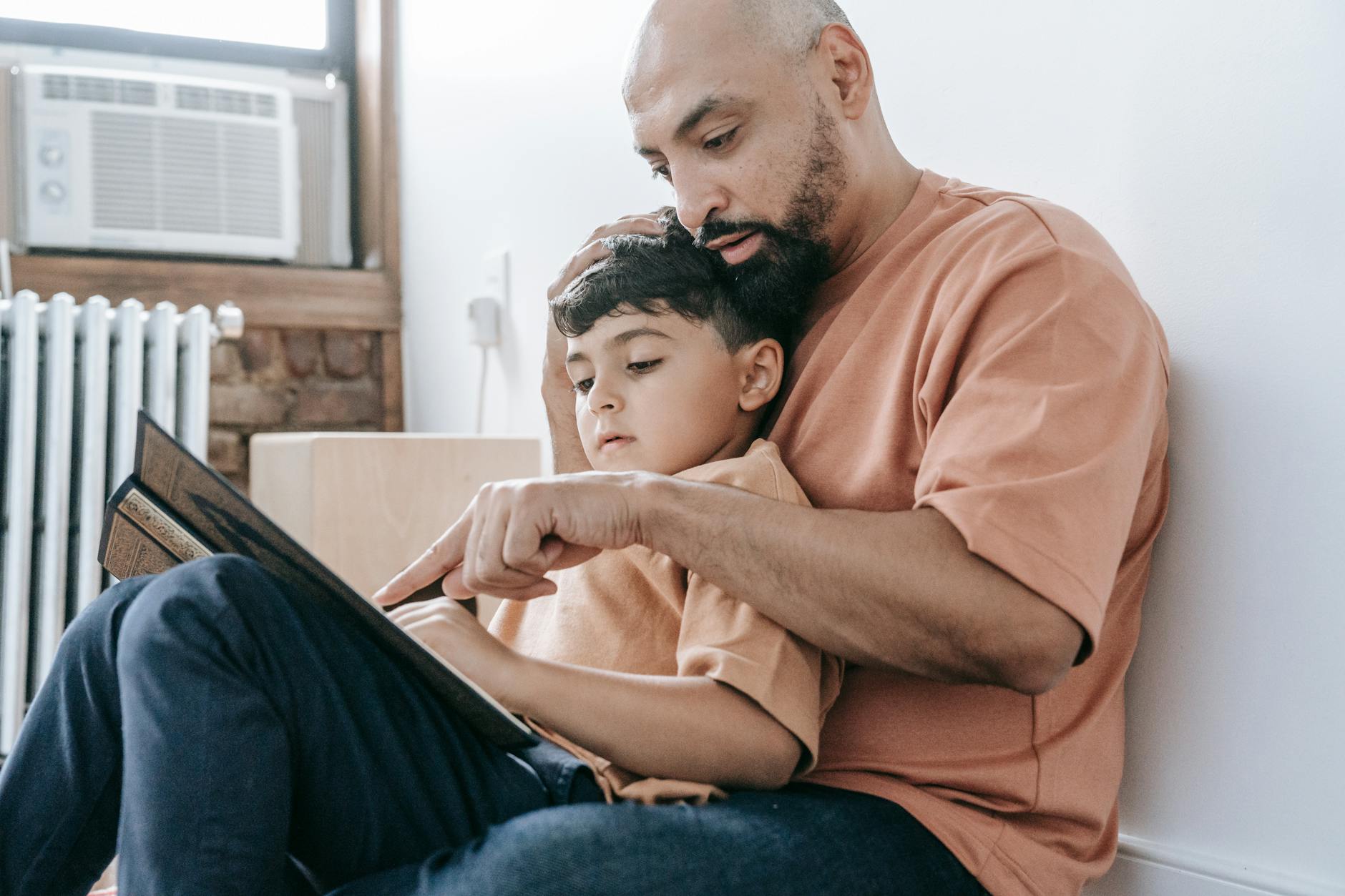
There’s a difference between reading to your kid and reading alongside them. When you read to them, you’re performing. When you read next to them — picking up the same book, taking turns with pages, following along with your finger — something shifts. It becomes a shared activity instead of an assessment.
A father I met at my daughter’s Taekwondo class put it better than I ever could: “I learn and read what my daughter does, so we’re doing it together.” That sentence changed how I thought about the whole thing. When kids see you genuinely engaged in the same story, they stop feeling like they’re being evaluated. It becomes collaboration.
2. Ask What They Think Is Going to Happen Next
This sounds small, but it’s one of the most effective reading strategies out there. Instead of correcting every stumbled word, ask: “What do you think happens next?” Or: “Why do you think she did that?”
Comprehension grows when kids feel like the story belongs to them. A well-timed question builds more than a corrected mispronunciation ever will. According to Reading Rockets, asking prediction questions before, during, and after reading is one of the highest-impact things a parent can do at home.
3. Build a 15-Minute Daily Habit
Fifteen minutes sounds small. It is small. That’s the point.
The goal isn’t an hour-long reading session — it’s a daily habit that your kid doesn’t resist. Same time, same spot, low pressure. Not “homework.” Not “a thing we have to do.” Just the thing your family does.
Our daughter eventually started asking for her reading time. That took longer than I’d like to admit — there were nights where it was a fight, and nights where we skipped it entirely. But the habit formed. Consistency, even imperfect consistency, is what builds readers. Research consistently shows that daily reading, even in short sessions, has a significant impact on literacy development over time.
4. Let Them Pick the Book
Reading what you want to read is motivating. Reading what someone else assigned is work. These are different experiences.
If your kid wants to read the same Diary of a Wimpy Kid book for the fourth time, let them. If they want to read a book about bugs, rockets, or the worst knock-knock jokes in history — great. The goal right now is getting them to want to read. Interest is the engine. Everything else follows.
5. Don’t Correct Every Mistake
This one is counterintuitive. When your kid mispronounces a word, your instinct is to fix it. Resist.
Self-correction is a skill. When you jump in too fast, kids stop trying to fix their own mistakes — they just wait for you. Instead, give them a few seconds. If they catch it themselves, let them. If they don’t and it matters for comprehension, gently ask: “Does that sound right to you?”
If they’re stuck on a word, encourage them to sound it out or skip it and come back. The habit of pushing through is more valuable long-term than the habit of stopping and waiting to be saved.
6. Talk About What You’re Reading Too
Kids pay attention to what adults do, not what they say. If you want your child to value reading, let them see you doing it.
You don’t need to be reading a novel. Tell them about an article you read. Share something interesting from a book you’re working through. Say: “I read something today that made me think about you.” Make reading a thing adults do by choice, not just something kids are made to do by obligation.
7. Build a “What Did You Learn?” Habit
This one goes beyond reading, but it reinforces everything else. After school, after Taekwondo, after CodeMonkey, after a playdate — ask: what did you learn today?
Not “how was your day.” Not “did you do your homework.” What did you learn?
This habit trains kids to notice their own growth. It makes learning something they track, not just something that happens to them. And it turns your dinner table into a low-key debrief where reading, thinking, and curiosity all get a moment.
How Atlas HQ Helps With Learning at Home
The “Lessons Learned” feature in Atlas HQ grew out of exactly this habit. The idea was simple: give kids — and parents — a structured place to capture what they took away from any activity. Not just school. Taekwondo. Chess practice. A conversation with a grandparent. A book.
I built it because I wanted a way to ask “what did you learn today?” without it becoming a blank stare at the dinner table. When there’s a place to put the answer — something she can see, something that builds over time — it changes the quality of the answer. It becomes a habit of reflection, not just a question to dodge.
If you’re looking for a way to reinforce the reading and learning habits you’re building at home, Atlas HQ can help you structure that — without turning it into another thing to manage.
Frequently Asked Questions
How can I help my child with reading at home if I’m not a trained teacher?
You don’t need teaching credentials to support your child’s reading. The most impactful things you can do — reading alongside them, asking questions about the story, building a consistent daily habit — are all within reach for any parent. Consistency and genuine interest matter more than technique.
How long should my child read at home each day?
Even 15 minutes of daily reading has been shown to make a meaningful difference. The key isn’t duration — it’s regularity. A short, low-pressure session every day builds more over time than longer, sporadic sessions that feel like homework.
How to help kids with reading at home when they resist or refuse?
Start by removing the “test” feeling. Let them pick the book. Read alongside them rather than evaluating them. Ask curious questions instead of comprehension checks. When reading feels like something you do together, resistance usually softens. Also check when you’re asking — a tired kid at 8pm will resist things a rested kid at 5pm would enjoy.
What’s the difference between reading to a child and reading with them?
Reading to a child is one-directional — you perform, they listen. Reading with them means taking turns, following along, asking questions, letting them lead. Both have value, but reading with them builds more active engagement and comprehension over time.
My child reads the words but doesn’t seem to understand what they read. What should I do?
This is a comprehension issue, not a decoding issue — and it’s common. Focus less on accuracy and more on meaning. Before reading, ask what they think the book will be about. During reading, pause and ask what’s happening. After, ask what the character might do next. These habits build the habit of reading for meaning, not just reading aloud.
Make homework time less painful — starting tonight
Atlas HQ gives your kids a step-by-step homework routine they can follow on their own. No more arguing. No more nagging.
Build your homework routine →You Don’t Need a Teaching Degree. You Need to Show Up.
Some nights reading time is a battle. Some nights your kid will read the same two pages three times and still not remember what happened. Some nights you’ll skip it entirely because everyone is exhausted and that’s the right call.
Real families aren’t perfect. The goal isn’t perfect. The goal is a consistent, low-pressure presence around books and reading and learning — one that signals to your kid that this stuff matters, that you find it interesting, and that they’re not alone in it.
That’s it. Show up. Ask a question. Read something yourself. Consistency and curiosity beat credentials every time.
What does reading time actually look like in your house right now? Drop it in the comments — there’s no wrong answer, and you might be doing more right than you think.
For more on supporting your child’s learning at home without turning every evening into a battle, check out how to help kids with homework and why does my child forget everything at school.