

How Much Screen Time Is Too Much: 5 Proven Parent Guidelines
It is Saturday afternoon. Your kid has been on the tablet for an hour and a half. You glance over, feel a quiet nudge of guilt, and wonder — should I say something? Is this too long? You have probably heard a dozen different numbers. Two hours. One hour. No screens before age two. The recommendations seem to shift every few years, and none of them account for what is actually happening on the screen.
If you have been searching for a clear, honest answer to how much screen time is too much, you are in the right place. For the full picture on why screen time is so hard to manage, check out our complete guide to kids and screen time. This post focuses specifically on the research-backed guidelines — and what they actually mean for real family life.
Table of Contents
Why “How Much Screen Time Is Too Much” Is the Wrong Starting Question
Here is the thing nobody tells you upfront: the question itself is a little misleading.
When parents ask how much screen time is too much, they are usually picturing a single number — a threshold to set and enforce. But the research does not quite work that way. Studies from the American Academy of Pediatrics and others consistently show that what kids are watching matters as much as how long they are watching it.
A child spending 45 minutes on an interactive coding app is having a fundamentally different experience than a child passively watching YouTube compilations for 45 minutes. Both clock in as “45 minutes of screen time.” Only one of them is actually a problem.
That said, time still matters. And the research does give us real guidelines — they are just more nuanced than a single magic number.
In my own house, we do not track screen time by the minute. There are no screens on weekdays at all. On weekends, there might be a movie Friday or Saturday evening, or some time on CodeMonkey or a chess app. The tablet is not hidden — it just is not a constant presence. The fights over turning it off almost never happen. Not because my kids do not love screens, but because screens are not the default activity in our house.
That is the shift this post is really about.
How Much Screen Time Is Too Much by Age — 5 Research-Backed Guidelines
The AAP’s screen time recommendations for school-age kids are the most widely cited starting point for parents. Here is how to actually use them.
1. Follow the AAP Baseline — But Treat It as a Starting Point, Not a Finish Line
The current AAP guidance for school-age children ages 6 to 12 does not set a strict daily time limit. It recommends that screen time not interfere with adequate sleep, physical activity, and other behaviors essential to health. In practice, most pediatricians interpret this as under two hours of recreational screen time on school days.
That two-hour figure is useful. But the more important question is whether your child is still reading, playing, moving, sleeping, and engaging with the people around them. If those boxes are checked, the clock matters less than you might think.
2. Judge Quality, Not Just Clock Time
Passive, unstructured screen consumption — autoplay videos, open-ended gaming, social media browsing — is what the research consistently flags as problematic. It is linked to sleep disruption, reduced attention, and irritability in school-age children. Educational or creative content tells a different story. Coding platforms like CodeMonkey, puzzle games, and co-viewed documentaries like “How It’s Made” are a categorically different experience. The screen time conversation in your house should include what your child is doing, not just for how long.
3. Schedule Screen Time Like Any Other Activity
One of the most practical things you can do is give screen time a specific slot in the day rather than leaving it as an on-demand option. After homework. Before dinner. Weekend mornings. Whatever works for your family.
When kids know exactly when screen time is coming, they stop lobbying for it constantly. The routine absorbs the negotiation. You are not the villain who keeps saying no — the schedule just says “not yet.” This works especially well for school-age kids ages 6 to 8, who are at exactly the right developmental stage to start internalizing daily structure.
4. Watch for Behavioral Signals, Not Just Minutes
The best indicator that screen time has crossed a line is not the clock — it is your child’s behavior. Consistent irritability when devices are turned off, difficulty transitioning to other activities, loss of interest in physical play, and trouble settling down at night are the real warning signs. If you are seeing those patterns regularly, that is a clearer signal than any time limit. Pull back the total time and tighten the structure. Even if the clock says you are within the guidelines, your kid’s behavior is telling you something important.
5. Co-View and Co-Play Whenever You Can
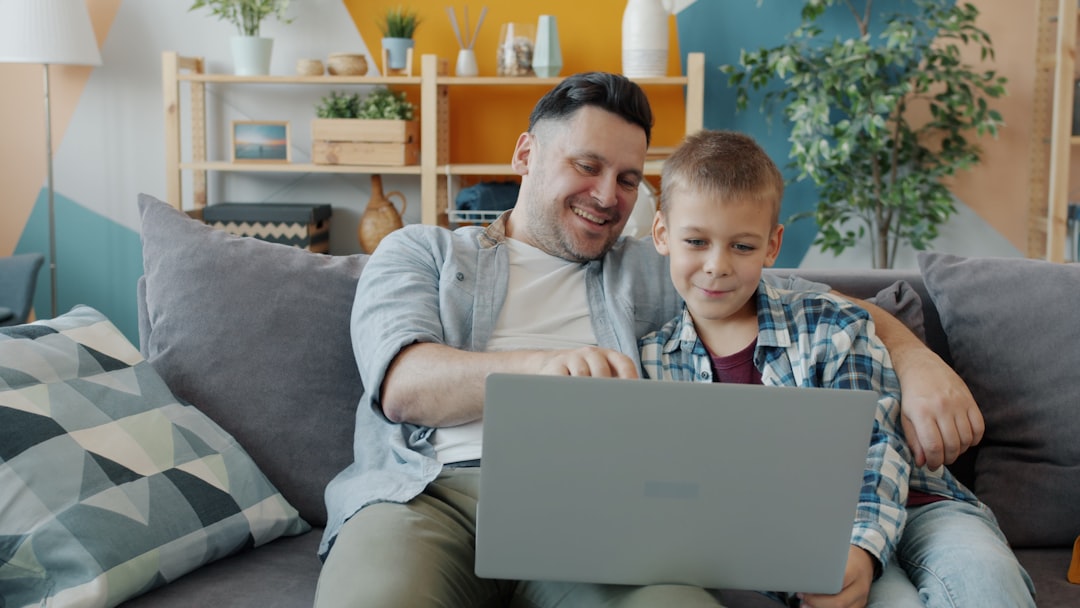
Research consistently shows that screens become significantly more educational when a parent is involved — even briefly. Sitting down for ten minutes during a show and asking questions (“Wait — why do you think he did that?”) turns passive watching into active thinking. Common Sense Media has solid resources for age-appropriate content recommendations and co-viewing conversation starters. This does not mean you need to watch everything with them. But occasional co-viewing — especially during educational content — changes what your child actually gets out of the time.
How Atlas HQ Helps With Screen Time
One of the things I knew early on when building Atlas HQ was that the solution to screen time tension was not a timer or a lock. It was structure. When I started treating screen time as a scheduled slot in my daughter’s day — the same way I scheduled Taekwondo or reading — the arguments practically disappeared.
That is exactly how the Routines feature works. Screen time becomes an activity block, like anything else in the day. It is scheduled, visible, and expected. Kids know it is coming, and when the block ends, they know what is next — so there is no standoff about turning it off. You are just moving to the next thing.
If you are also struggling with getting your kid off screens when the time comes, or wondering whether your child is showing signs of a deeper pattern, those posts go deeper into both situations.
Frequently Asked Questions
How much screen time is too much for a 6-year-old?
The AAP recommends limiting recreational screen time to under two hours per day for school-age children, including 6-year-olds. More important than the exact number is whether screen time is interfering with sleep, physical activity, reading, and in-person play. If those are intact, you are likely in a healthy range.
Is educational screen time the same as regular screen time?
Not quite. Interactive, educational content — coding apps, puzzle games, co-viewed documentaries — has a different impact than passive entertainment. Most research that identifies screen time as harmful is referring to unstructured, high-stimulation passive consumption. Educational use is generally treated differently by pediatricians and child development researchers.
What happens when kids have too much screen time?
Common signs include irritability when devices are taken away, difficulty transitioning to other activities, sleep disruption, reduced interest in physical play, and trouble focusing at school. These behavioral signals are often more reliable indicators than the clock. If you are seeing them regularly, it is worth pulling back and adding more structure.
Should I use parental controls to limit screen time?
Parental controls can help, but structure tends to work better long-term. When kids understand that screen time has a scheduled place in the day, they resist limits less than when controls feel like arbitrary restrictions. A consistent daily routine reduces the need to rely on technology enforcement tools.
What do the experts say about screens before bedtime?
Most sleep researchers and pediatricians recommend stopping screen use at least one hour before bed. Blue light from devices suppresses melatonin, which makes it harder for children to fall asleep. This applies even to calm screen activities — the light itself is the concern, not just the stimulation level.
You Do Not Have to Get This Perfect
How much screen time is too much? Probably less than you are worried about — if the structure is right. The families that handle this well are not necessarily stricter. They are just clearer. Screen time has a place. Everything else has a place. And when kids can see the shape of their whole day, they stop fighting for scraps of screen time.
Some days the tablet stays on longer than you planned. That is normal. What matters is that the default is not chaos — that there is a pattern your family can come back to.
Drop a comment with what screen time looks like in your house. Whether you go by the clock, the content, or something else entirely, I read every one.