
Table of Contents
Analog play for kids sounds simple until it is 4:15 on a Tuesday and your first-grader is asking for the tablet before her backpack is even off her shoulders. Say no, and you get the sigh. The whine. The dreaded “I am so booored.”
If that is your afternoon, you are not failing — and your kids are not broken. They have just learned that a screen is the fastest way to feel something, and everything else takes a little more effort to get going. The good news: you can shift that without declaring war on devices.
Why More Real-World Play Feels Like Such a Fight
Here is what nobody tells you: the resistance is not really about the activity. It is about momentum. A screen asks nothing of your child — it turns on and the fun arrives. A puzzle, a fort, a game of cards? Those need a first move. And when a device has been the default, that first move can feel like climbing a hill.
In our house, the tell was the meltdown when a show got turned off. But honestly, that happened rarely, and it was never really about the screen. It was about the abrupt stop with nothing lined up next. When there was a clear next thing — dinner, her little sister, a chess app she actually likes — the transition was smooth. The problem was never screens. It was the empty space after them.
It helped to remember that analog play for kids is not a rejection of technology — it is a counterweight. My daughter still loves her chess app and the occasional weekend movie, and that is fine. The goal was never zero screens. It was making sure the screen was one option on a full shelf, not the whole shelf.
Once I stopped treating this as a battle over screen time and started treating it as a gap in the schedule, everything got easier. If you are still deciding where your family limits should sit, this guide on how much screen time is too much is a calmer place to start than most.

5 Simple Ways to Add More Analog Play for Kids
- Give play its own time slot. Start here, because it fixes the most. Put play on the calendar the same way you would put homework or dinner — not a rigid lesson plan, just a protected slot that says this is play time. When my daughter knows screen time is a scheduled activity and not a constant option, she stops negotiating for the tablet. She is not wondering if it is coming; she knows when. A simple family media plan can help you decide where the slots go. The structure is the fix, not the activity.
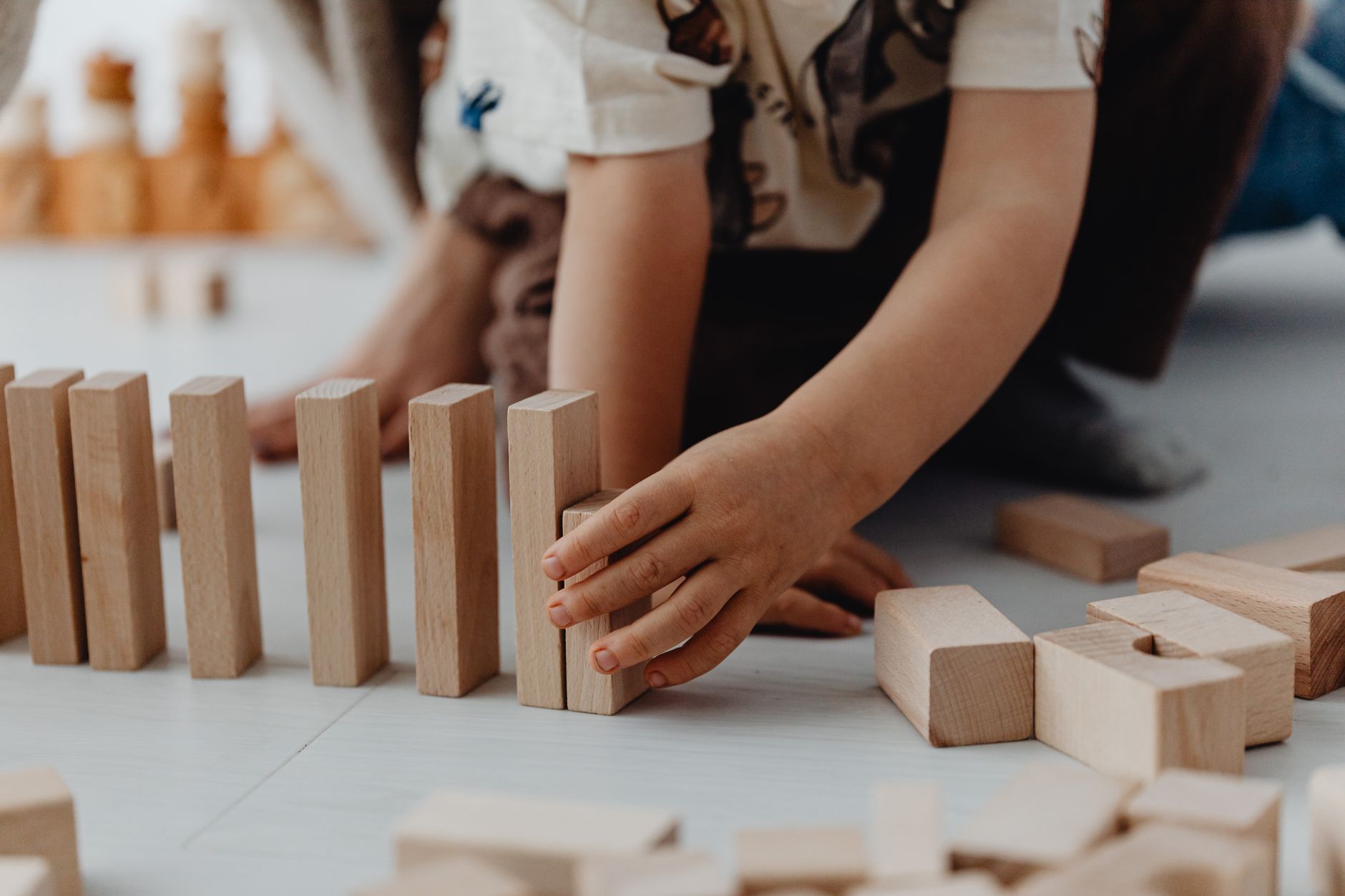
- Put analog play within reach. Kids reach for whatever is closest. If the tablet is on the couch and the blocks are in a bin in the closet, the tablet wins every time. So flip it. Leave the blocks out on the table. Keep a deck of cards, sidewalk chalk, and a half-built puzzle where little hands can actually get to them. Friction decides more than willpower does.
- Follow their real interests, not a checklist. Analog play for kids works best when it is built on what they already love, not what looks good on an activity list. My oldest does Taekwondo three days a week, plays chess, and will build an entire imaginary world with her two-year-old sister if you give her ten minutes. I do not have to manufacture play — I just make room for what she is already wired for. Watch what your kid gravitates toward and stock more of that.
- Play with them for ten minutes. This is the one that moved the needle most. Kids do not want the screen as much as they want you. Sit down for one round of cards or one tower built together, and the activation energy disappears — they usually keep going long after you get up. Ten minutes of your attention buys an hour of independent play. It is also the quiet fix for the meltdown when you take the iPad away — connection first, screen second.
- Let a little boredom do its job. Resist the urge to rescue every “I am bored.” Boredom is the runway for imagination — the uncomfortable pause right before a kid invents a game. Pediatric researchers have long pointed to unstructured play as essential for healthy development, not a luxury (see the AAP report on the power of play, and this piece on the benefits of boredom). Hand them the boredom, hold the tablet, and watch what they build.
How Atlas HQ Helps
None of this works if it lives only in your head. That is actually why we built the Routines feature in Atlas HQ — I needed a way to make play a real, scheduled part of the day instead of the thing that only happened when I remembered to suggest it. We treat screen time as one activity slot among many: some days it is a show, some days it is chess, some days it is the backyard. The slot is fixed; the activity is flexible. Once the schedule does the reminding, I stopped being the parent who takes the tablet away and started being the one who shows up for the fun part.
End the screen time battle before it starts
Atlas HQ helps your family set clear, consistent screen limits — the kind your kids actually respect because they can see them coming.
See how it works →Frequently Asked Questions
What is analog play for kids?
Analog play for kids is any hands-on, screen-free activity — building, drawing, board games, pretend play, or outdoor time. It is not anti-technology; it is the real-world play that helps kids practice patience, creativity, and problem-solving.
How much analog play should my child get each day?
There is no magic number, but aim to make real-world play the default and screens the scheduled exception. Even 30 to 60 focused minutes a day — especially with a parent involved for the first few — makes a noticeable difference.
My kid says everything analog is “boring.” What do I do?
Expect that at first; a screen sets a high bar for instant stimulation. Start small, join in for ten minutes, and let a little boredom sit. Boredom is usually the last step before a child invents their own fun.
Do I have to get rid of screens to add more analog play?
No. The goal is not zero screens; it is balance and structure. Give screen time its own slot and stock analog options within reach, and most kids find their way to real-world play on their own.
Some afternoons still fall apart. There are days the tablet wins, dinner is late, and nobody builds a fort. That is normal — you are raising humans, not running a program. But small shifts, repeated, are what actually change a household: a slot on the schedule, a puzzle left out, ten minutes on the floor. Start with one this week. If evenings are your hardest stretch, this walkthrough on getting kids off devices at night pairs well with everything here. Then come tell me how it went in the comments — I read every one.