
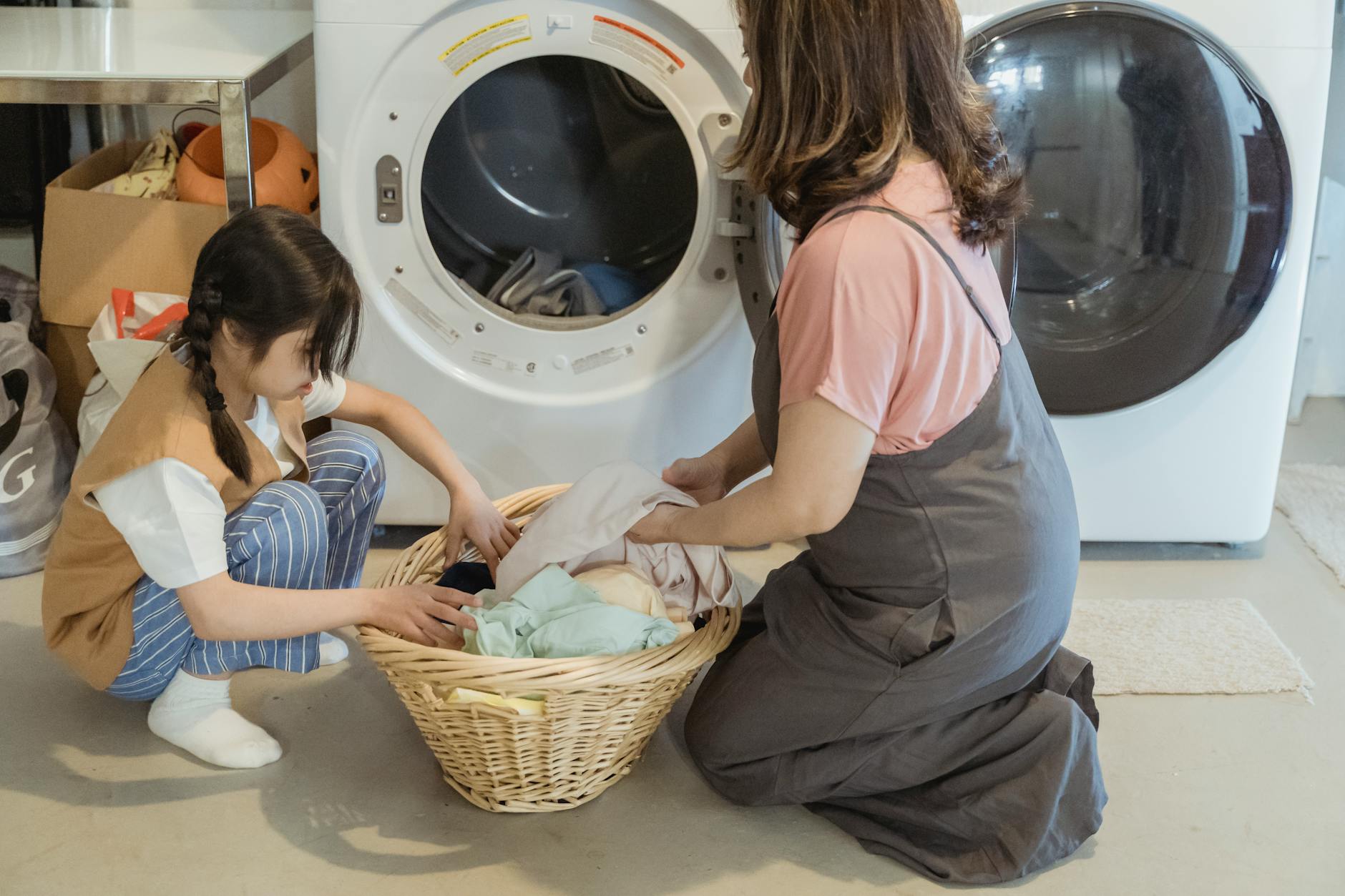
How to Get Kids to Do Chores Without Complaining: 5 Proven Strategies That Actually Work
Dinner is done. The floor needs sweeping. You say the words — “time for chores” — and the energy in the room shifts immediately. Your kid suddenly can’t hear you, has a stomachache, or launches into a negotiation about why right now isn’t the right time. You’re not dealing with a lazy child. You’re dealing with a kid who needs a better system. Here’s how to get kids to do chores without complaining — and actually make it stick.
Before we get into the strategies, if you want the bigger picture on building real accountability at home, our complete guide to raising responsible kids is a great place to start.
Table of Contents
Why Kids Push Back on Chores (And It’s Not What You Think)
Most parents assume chore resistance is about defiance. It’s usually not. It’s about transition. When you ask your kid to stop doing something fun and start doing something they didn’t choose, you’re asking them to make a hard cognitive switch. That’s difficult for adults. For a 6- or 7-year-old whose brain is still building self-regulation, it’s genuinely hard.
My daughter is six. Her regular chores are sweeping the kitchen floor after dinner and keeping her room tidy. When I recently added putting away her folded laundry, her first response wasn’t “I won’t.” It was “I can’t do this” and “I don’t know how.” Not defiance — self-doubt. She’d never done it before, and her brain defaulted to resistance rather than try and risk getting it wrong.
Timing matters just as much. On days when she’s had wall-to-wall free time and play, asking for cooperation late in the afternoon is a losing proposition. She’s been in “free mode” all day, and the gear-shift to “responsibility mode” has a real cognitive cost. Understanding that changes how you approach the problem entirely.
What I hear from other parents — especially friends who grew up in households where kids were “seen but not heard” — is that we sometimes confuse our kids’ resistance with disrespect. Sometimes it is. But often it’s just friction. And friction is workable.
How to Get Kids to Do Chores Without Complaining: 5 Strategies That Work
1. Start Small — One New Chore at a Time
The fastest way to create a meltdown is to pile on three new responsibilities at once. When kids feel overwhelmed before they’ve even started, they shut down. Introduce one new chore at a time. Show them how. Then step back and let them do it — imperfectly.
That last part matters. When my daughter struggled with putting away her clothes, I told her to try — and do it wrong if she had to. Learning needs repetition, not perfection. Research from Zero to Three consistently shows that children learn best through repeated low-stakes attempts. The goal at the start is comfort, not competence. If they get frustrated, don’t take over. Ask “what part is confusing?” and walk them through exactly that piece.
2. Give Them a Say in the Order
Here is a small shift that changes the whole dynamic: stop telling your child what sequence to do their chores in. Give them the list of what needs to get done — and let them decide the order.
Kids who have zero control over their environment are more likely to resist. Kids who have even a small piece of ownership — “do I sweep first or tidy my room first?” — are more likely to engage. This isn’t permissive parenting. It’s smart parenting. Building independent routines for kids ages 6 to 8 is all about this balance: structure that still leaves room for self-direction.
3. Time It Right
Chore resistance peaks at predictable moments: right after a long stretch of free play, when they’re hungry, when they’re tired, or when they’ve been making transitions all day. Pay attention to when your household is most likely to blow up over chores and work backwards.
If after-dinner sweeping is a nightly battle, ask yourself whether your child has had enough of a wind-down from the school day before you ask. You can’t always change the timing — but knowing the pattern lets you approach the moment differently. A calm transition warning like “in 10 minutes we’re going to start our evening routine” reduces the surprise and lowers the resistance significantly.
4. Make “I Don’t Know How” Okay
A lot of chore resistance is anxiety in disguise. Kids who haven’t done something before will often say “I don’t want to” when what they actually mean is “I’m not sure I can.” These look identical from the outside.
When your child resists a new chore, try asking “Have you done this before?” instead of “Why won’t you just do it?” If the answer is no — or they look uncertain — that’s your signal. Walk through it together once. Step back. Let them try. Praise the attempt, not just the result. The Child Mind Institute notes that children who feel safe failing are more willing to try new things — which maps directly onto willingness to take on new responsibilities over time.
5. Build Chores Into a Visible Routine
The biggest mistake most chore charts make is that they exist in isolation. A list on the fridge doesn’t create habit. What creates habit is a chore being embedded inside a larger predictable sequence.
When a child knows that “after dinner always means: clear your plate, then sweep, then free time,” the chore stops being an interruption. It becomes a known part of the day. The complaint rate drops because the resistance was never really about the chore — it was about the surprise of being asked. Remove the surprise and you remove most of the friction. Check out our post on how to build good habits in kids for more on making positive behaviors automatic over time.
How Atlas HQ Helps With Chores
Routines in Atlas HQ aren’t rigid timelines. They’re a list of tasks that need to happen within a time block — and your child can check them off in whatever order they choose. That flexibility is intentional. When my daughter’s chores were just “clean your room” said aloud, they felt vague and negotiable. When they show up as specific tasks inside her evening routine, they’re just part of what happens after dinner.
The ability to choose order makes a real difference. Kids who have some control over their environment are more willing to cooperate — not because they’re being spoiled, but because agency is genuinely motivating. That’s why we built the routines feature this way.
Give your kids ownership — and watch responsibility grow
Atlas HQ makes it easy to assign tasks, track progress, and build the kind of accountability that actually sticks.
Try it free →Frequently Asked Questions
Why does my child complain every time I ask them to do chores?
Most chore complaints are about transition, not the chore itself. Kids who are pulled out of play or free time will resist. Consistent timing, a warning before the transition, and embedding chores in a predictable routine reduce resistance dramatically over time.
How do I get kids to do chores without fighting or arguing?
Give them some control over the order they complete their tasks. Kids who have zero say in their environment are more likely to push back. A visible chore list where they can check things off in their own order reduces arguments significantly.
At what age should kids start doing chores?
Most child development experts recommend starting simple age-appropriate chores around ages 3 to 4 — putting toys away, carrying their plate to the sink. By ages 6 to 8, kids can handle more: sweeping, tidying their rooms, putting away laundry. The American Academy of Pediatrics notes that chores matched to a child’s developmental stage build genuine competence and self-esteem.
What should I do when my kid refuses to do chores entirely?
First, check the timing — is this a high-resistance moment? Second, check whether the chore is new and they may need a walkthrough. Third, stay calm and don’t turn the chore into a power struggle. Hold the expectation, follow through with a natural consequence (free time doesn’t start until chores are done), and stay matter-of-fact about it.
How do I get kids to do chores without nagging?
Make the chore a non-negotiable part of their visible routine rather than a request you have to repeat. When it’s just “part of what we do after dinner,” you stop asking — they know. Pair this with genuine praise for completion and the nagging loop tends to break within a few weeks.
Every family is different. Some kids take to chores quickly; others need months of consistent structure before it clicks. That’s normal — you’re not failing, you’re building something. Drop in the comments what works in your house, or what’s still a battle. I read every single one.
[…] in the driver’s seat. If you’re working on chore consistency specifically, our guide on getting kids to do chores without complaining is a great companion […]