

Kids Don’t Follow Through on Anything: 5 Proven Fixes That Actually Work
You asked her to clean her room. She started — moved a few stuffed animals, found a marker she’d been looking for, started drawing with it — and forty minutes later the room looks exactly the same as when she started. You’re not dealing with a defiant child. You’re dealing with a follow-through problem. And it’s one of the most common things parents of school-age kids run into.
Kids don’t follow through on anything for the same reason adults sometimes don’t: the task felt manageable until it didn’t, and there was no system to pull them back. The good news is that follow-through is a skill. It can be built. And you don’t need a reward chart, a consequence, or a lecture to do it.
If you want the bigger picture on raising kids who take ownership of their responsibilities, our complete guide to raising responsible kids covers the full framework. But this post is focused specifically on follow-through — what’s actually going on when kids don’t finish things, and five approaches that actually change the pattern.
Table of Contents
Why Kids Struggle to Follow Through (And What’s Really Happening)
When kids don’t follow through on anything, most parents assume it’s a motivation problem. The kid just doesn’t want to do it. But that’s usually not the whole story — especially for kids ages 6 to 8.
At this age, children are still developing the executive function skills that allow them to hold a goal in mind, manage distractions, and push through discomfort to get to the finish line. The Child Mind Institute notes that self-regulation and task persistence are skills that develop well into adolescence — they are not fully formed at age seven, no matter how bright or capable your child is.
What that looks like in real life: your kid starts a task with good intentions, hits the first moment of friction, and their brain naturally moves toward something easier and more rewarding. They are not being lazy. They are being developmentally appropriate — but that doesn’t mean you can’t help them build better habits.
There’s also the self-doubt piece. My own daughter, who’s six, will often start a new responsibility — like putting away her folded clothes — with “I can’t do this” or “I don’t know how to do this.” My approach is to tell her to try and do it wrong. Not to get it perfect, just to try. Because the act of attempting — even imperfectly — is where follow-through actually gets built.
The other major factor is transitions. When kids are deep in something enjoyable and a task interrupts that, the resistance isn’t really about the task. It’s about the loss of the enjoyable thing. That’s the moment when follow-through falls apart most often — not at the start of a task, but at the moment of being asked to leave something fun to start it.
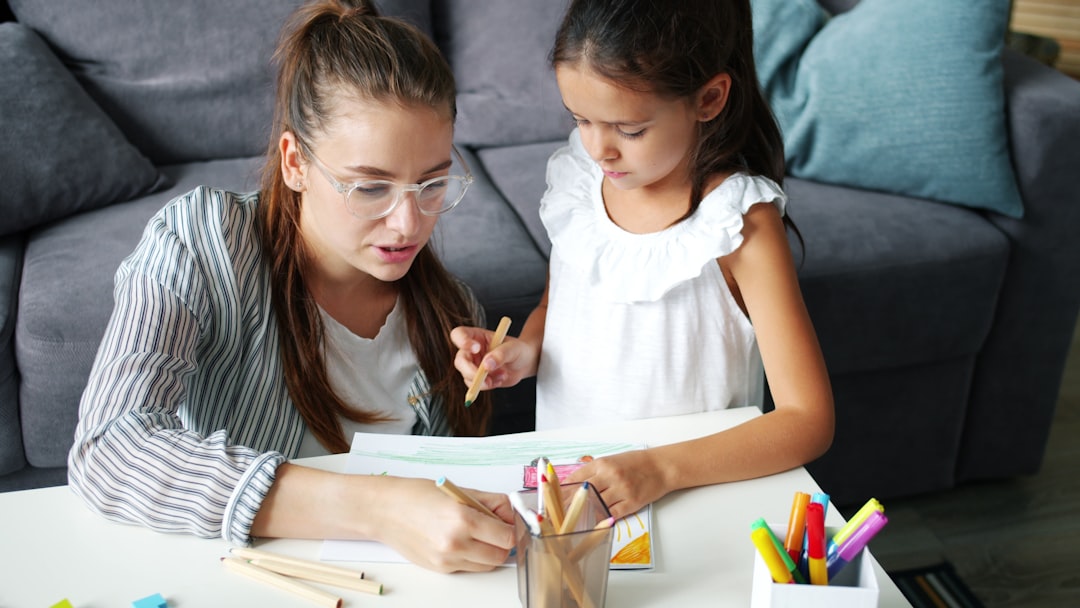
5 Proven Ways to Build Follow-Through in Kids Who Don’t Follow Through on Anything
These aren’t tips that require a perfect family or unlimited patience. They’re small structural shifts that reduce the friction kids run into when they try to follow through.
1. Break Every Task Into the Smallest Possible Steps
This one sounds obvious, but most parents underestimate how granular the breakdown needs to be. “Clean your room” is not a task for a six-year-old. It’s twelve tasks stacked into one word.
Break it down: put the stuffed animals on the bed. Now put the books on the shelf. Now pick up the clothes off the floor. One step at a time, said out loud together. You’re not micromanaging — you’re co-building a mental map your child can follow without you hovering.
The key is making the first step so small it’s almost impossible not to do it. Once she’s started, momentum does the rest. Getting started is almost always the hardest part.
Research from Harvard’s Center on the Developing Child describes this kind of scaffolding as building executive function “from the outside in” — the structure you provide externally gradually becomes the structure children internalize. You’re not doing it for them. You’re teaching them how thinking about tasks works.
2. Let Them Own the Order
Here’s something most parents miss. Kids don’t resist tasks — they resist not knowing what comes next and not having any say in it.
This is the insight behind how we designed Routines in Atlas HQ. I didn’t build it with a fixed sequence because I noticed that what my daughter needed wasn’t a rigid checklist — it was the autonomy to choose the order while still completing everything. The chores are the same every evening. She just gets to decide whether she sweeps the floor first or puts away her clothes first. That small choice changes her entire posture toward the tasks.
Try it at home without any app: write the three or four things that need to happen and tell your child they can do them in any order they want. Watch how differently they engage. When kids feel like they have ownership over how something gets done, follow-through goes up significantly.
3. Use the Transition Warning
Most follow-through failures happen not because the task is too hard, but because the kid wasn’t prepared for the transition away from what they were doing. The battle is usually getting kids off the fun thing they’re already doing — that’s the real challenge most parents face.
A five-minute warning is not new advice, but the specificity of it matters. “In five minutes we’re going to start your bedtime routine” lands differently than “five more minutes.” Tell them exactly what’s coming and what the first step will be. “In five minutes, we’re going to start your routine. The first thing you’ll do is put your book away.”
When children know what’s coming, the transition itself is less jarring. They can mentally prepare. You’re not interrupting — you’re previewing. For more on building good habits into your child’s daily structure, that post covers the habit loop piece in more depth.
4. Name the Finish — Don’t Just Move On
This one is counterintuitively powerful. When your child actually completes something start to finish — even something small — stop and name it.
Not just “good job.” Specifically: “You started that and you finished it.” Or: “You said you’d put away your clothes and you did.” You’re reinforcing not the task itself, but the act of following through. Over time, your child starts to build an identity around being someone who finishes things.
The American Academy of Pediatrics notes that specific praise tied to behavior — rather than general praise — is significantly more effective at reinforcing the behavior you want to see repeated. “I noticed you finished your homework before dinner” does more work than “you were so good today.”
5. Build Follow-Through Into a Routine, Not a One-Time Ask
The single biggest difference between kids who follow through consistently and kids who don’t is structure — not personality, not motivation, not parenting style.
When follow-through is expected every day at the same time in the same sequence, it stops being a battle and starts being just how things work. Evening routine. Homework before screens. Room tidy before dinner. The same expectations, consistently held, over enough days that they stop requiring a negotiation each time.
This doesn’t mean rigidity. It means predictability. Kids thrive when they know what’s coming — not because they’re compliant, but because knowing what’s next removes the cognitive overhead of resisting something unknown. If you want a starting point for structuring this at home, our post on building independent routines for kids ages 6 to 8 is a good companion read.
How Atlas HQ Helps When Kids Don’t Follow Through on Anything
The Routines feature in Atlas HQ was built directly from this problem. Not from a product spec — from the reality that my daughter needed to feel like she had some ownership in how her evenings went, while I needed everything to actually get done.
The way it works: tasks go into a time block, and the child can see all of them at once and choose the order they want to complete them. There’s no fixed sequence enforced by the app. What’s enforced is the list — everything on it needs to be checked off before the routine is done. That structure gives her accountability without removing her agency. That’s the balance that makes follow-through sustainable.
The Good Deeds, Affirmations, and Gratitude features are connected to this too. My philosophy is that choices aren’t good or bad — they’re just choices with consequences. Helping kids see that affirming themselves, doing good things, and expressing gratitude are all choices — and that those choices shape what they feel capable of next — that’s what builds follow-through from the inside out.
Give your kids ownership — and watch responsibility grow
Atlas HQ makes it easy to assign tasks, track progress, and build the kind of accountability that actually sticks.
Try it free →Frequently Asked Questions
Why do kids don’t follow through on anything even when they want to?
Even motivated kids struggle with follow-through because it requires executive function skills — the ability to hold a goal in mind, manage distractions, and push through discomfort — that are still developing at ages 6 to 8. It’s not about wanting to finish. It’s about having the mental scaffolding to do it. That scaffolding gets built over time with structure and practice.
What’s the difference between a kid who gives up easily and one who doesn’t?
Mostly experience and structure, not temperament. Children who follow through consistently usually have predictable routines and regular opportunities to practice completing tasks — not harder tasks, just more consistent ones. Kids who seem to “give up easily” often just haven’t had enough low-stakes repetitions to build the habit of finishing.
Should I use rewards when my child doesn’t follow through on anything?
Short-term rewards can help a child get started, but they’re not a long-term fix for follow-through. What works better over time is making the expectation consistent, removing unnecessary friction, and naming the completion when it happens. Rewards shift the focus to the prize. Naming the finish shifts the focus to the identity of being someone who follows through.
How long does it take to build follow-through habits in kids?
Most parents see a meaningful shift within 3 to 4 weeks when the same structure is held consistently. The key word is consistently — sporadic enforcement with long gaps doesn’t build the habit. Daily repetition of the same expectations, even imperfectly held, is more effective than occasional perfect execution.
What if my child says “I can’t do this” every time they start something new?
This is extremely common and usually signals fear of failure more than inability. The most useful response is to tell them to try and do it wrong — take the perfection off the table entirely. Most children who say “I can’t” actually mean “I’m afraid it won’t be right.” Giving them permission to do it imperfectly is often all the unlocking they need.
Real families don’t follow through perfectly every day — and that’s not the goal. The goal is a structure predictable enough that follow-through becomes the default, and setbacks don’t unravel the whole thing. That takes time, patience, and a willingness to hold the same expectations on the hard days and the easy ones.
If you’ve found something that helps your kid actually follow through, drop it in the comments below. I read every one.